Installer Out of Business? Five Things to Check in a Window Guarantee Before You Need It
Window guarantees are written to survive the company that sold them, but only if you can prove who owes what. Five checks to run while the paperwork is still fresh.
- Written by
- Nadine Buckley
- Published
- Filed under
- Property
- Length
- 1,345 words, about 6 minutes
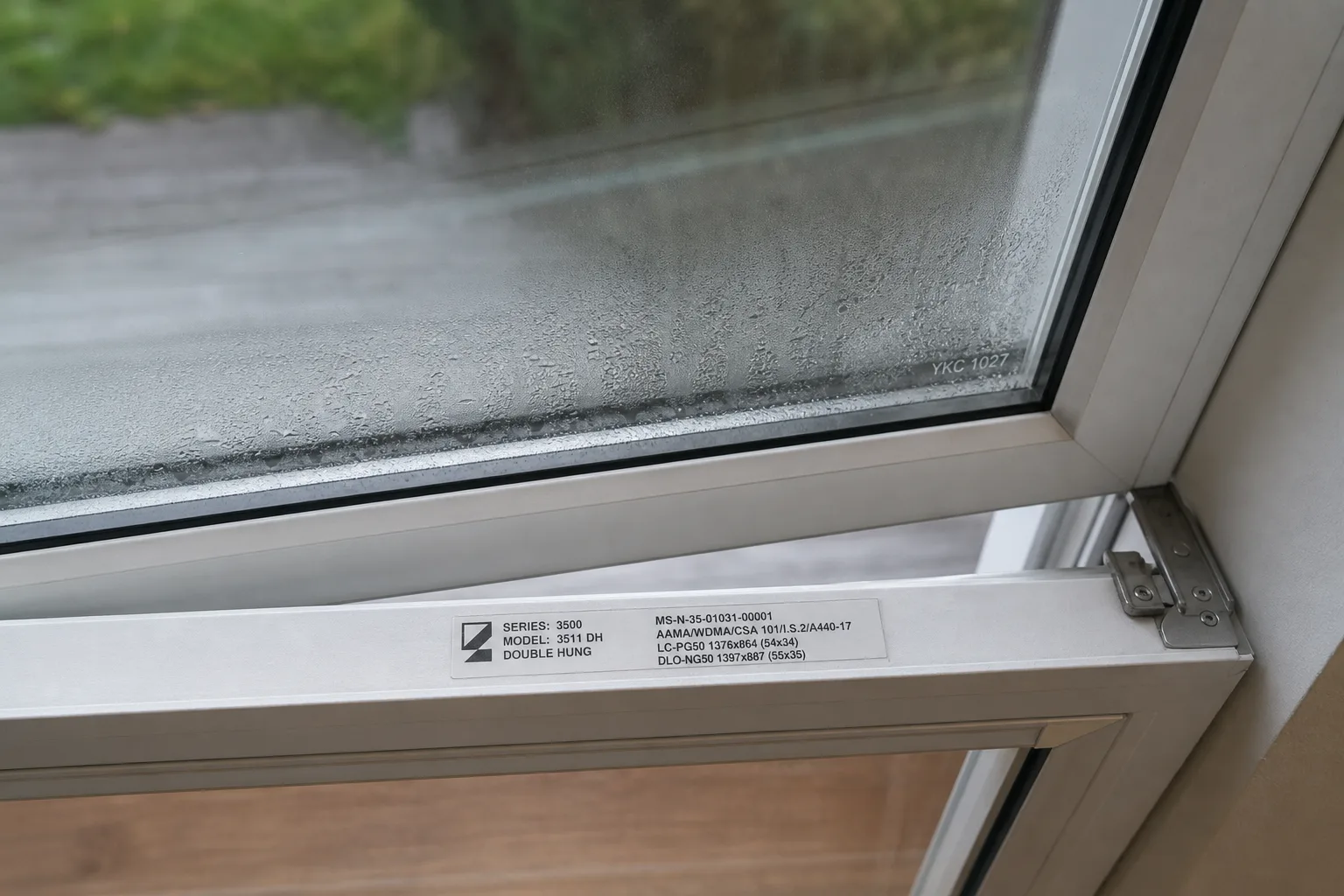
A fogged pane is not an emergency. That is exactly the problem. It sits there for a season or two, slightly cloudy at the bottom edge, and nobody does anything about it because nothing is leaking and nothing is broken in a way that stops the day. Then a second unit goes, then a sash stops locking cleanly in cold weather, and by the time anyone calls the number on the old invoice, the company that installed the windows has been dissolved for three years.
This is the ordinary life cycle of a window guarantee. It is almost never tested in year one. It gets tested in year nine, on a Tuesday, by someone who has moved into the house since the work was done. What determines whether it still pays is a handful of specific terms that were legible on day one and are hard to reconstruct later.
1. Separate the glass warranty from the labor warranty, because they are owed by different people
Nearly every replacement window job carries at least two promises, written by two parties, with different lifespans.
The manufacturer warrants the product: the insulating glass seal, the vinyl or fiberglass frame, the hardware, sometimes the coating. That obligation sits with the factory and survives the dealer completely. If the company that carried the trucks and the ladders closes, the factory in another state does not care.
The installer warrants the installation: flashing, shimming, sealant, square and plumb, the fact that the unit does not leak at the sill. That obligation dies with the installer unless somebody has stood behind it.
The practical consequence shows up in the most common failures. A seal failure is a product problem and will usually still be covered a decade in. Water staining the drywall under a window is almost always an installation problem, and that is the promise most likely to have evaporated. When you read the paperwork, the first question is not how long is it, it is which of these two is this document.
What to look for
- Two separate documents, or two clearly separated sections in one.
- The manufacturer named in full, with a model or series name, not just the dealer's logo.
- A labor term with an actual number of years attached, not the phrase "we stand behind our work."
- Whether the installer's labor coverage is backed by a third-party administrator or an insurer. That is the only version that reliably outlives the company.
2. Read the transfer clause before you need it, not at closing
Most manufacturer warranties on windows are transferable, and most of them are transferable exactly once. The conditions are narrow and they are where coverage quietly dies.
Typical terms limit the transfer to the first subsequent owner, require written notice to the manufacturer within a fixed window after the sale (often measured in weeks, not months), and sometimes charge a small fee. Some convert a long term into a shorter one on transfer: twenty years for the original purchaser becomes ten for the next.
The week-to-week consequence is unglamorous. A house changes hands, the seller leaves a folder in a kitchen drawer, the buyer is busy with movers and the utility transfers, and the thirty-day notice period passes unmarked. Nobody notices for years. Then a unit fogs and the claim comes back denied on a procedural point that would have taken one email to avoid.
If you are buying a house with recent windows, put the transfer notice on the same list as the utility accounts and the mail forwarding. If you are selling, the transfer paperwork is worth assembling and handing over, because an intact warranty is a thing a buyer's inspector will note favorably.
3. Find out what "lifetime" is measuring
"Lifetime" in window marketing is a defined term, and the definition is in the document. It may mean the lifetime of the original purchaser, the lifetime of the original purchaser's ownership of that home, or the useful life of the product as determined by the manufacturer. Those are three different promises.
Underneath the headline term, the coverage is usually tiered by component, and the tiers matter more than the headline:
- Insulating glass seal. Usually the longest and most generous term, often covering a replacement sash or glass unit.
- Frame and sash. Long, but typically limited to defects in material or workmanship, which excludes warping from a dark paint color you applied or from a mismatched storm window.
- Hardware. Shorter. Locks, balances, crank operators and rollers often carry their own term, and these are the parts that fail in ordinary weekly use.
- Screens, glass breakage, and finishes. Shortest, frequently excluded outright or prorated.
- Labor. The shortest of all. Many manufacturer warranties ship you a part and pay nothing to have it installed.
That last line is the one people trace back to late. A twenty-year seal warranty that covers the glass unit but not the labor leaves you paying a glazier a few hundred dollars to swap a sash the factory sent free. The coverage worked. It just did not cover the part of the job that costs money.
The Federal Trade Commission oversees how consumer product warranties are written and disclosed, including the distinction between a full warranty and a limited one, and the requirement that the terms be available to read before purchase. If a salesperson will not hand over the full document before you sign, that is the signal, not the sales pitch.
4. Secure the proof now, because the claim runs on identifiers you cannot recover later
A manufacturer with no record of your order needs some other way to confirm the window is theirs and when it was made. That evidence is physically present in the house and most people never look for it.
- The spacer bar etching or a small stamp inside the insulating glass unit, usually at a bottom corner, carrying a plant code and date.
- A sticker or label on the edge of the sash, visible when the window is tilted or opened, with a series name and order number.
- The NFRC label, if it was left on, which records the performance ratings and the manufacturer.
- The original contract and final invoice, which establish the installation date and the purchaser's name.
Spend twenty minutes. Photograph every label and every etching, one window at a time, and note which room each belongs to. Put the photos somewhere that survives a phone upgrade and keep the invoice with them. This is a small afternoon task that converts a vague claim into a specific one, and specific claims get processed.
5. Map the claim route for the day the installer no longer exists
Warranty claims on windows generally arrive at the factory through a dealer, not from a homeowner directly. When the original dealer is gone, the route still exists but you have to find it.
Call the manufacturer's consumer line and ask for the authorized service dealer covering your zip code. Most national window brands maintain a current list, and a service dealer can measure, order against the warranty, and install. You will usually pay that dealer for labor and a service call. The glass or hardware arrives at no charge if the claim is approved.
Expect the sequence to take weeks rather than days: an inspection visit, a claim submitted with photos and the unit identifiers, factory approval, then a build-and-ship lead time on a made-to-order sash. Plan around a fogged unit for a season. It is an inconvenience, not a failure.
Worth knowing in advance: some manufacturers will handle a claim directly with the homeowner when no dealer is nearby, and some regional glass shops will take on the labor for a flat rate if you supply the approved part. Either route gets the window back to clear.
The windows that end up fully covered a decade later are not the ones with the longest term printed on the brochure. They are the ones where somebody spent one hour, early on, identifying who owes what and writing down the numbers that prove it.