Quoted Three Different Numbers for the Same Facelift? Here Is What the Gap Is Made Of
A cosmetic surgery quote is three separate charges stapled together, and state rules on facilities and anesthesia move each one differently.
- Written by
- Nadine Buckley
- Published
- Filed under
- Health
- Length
- 1,085 words, about 5 minutes
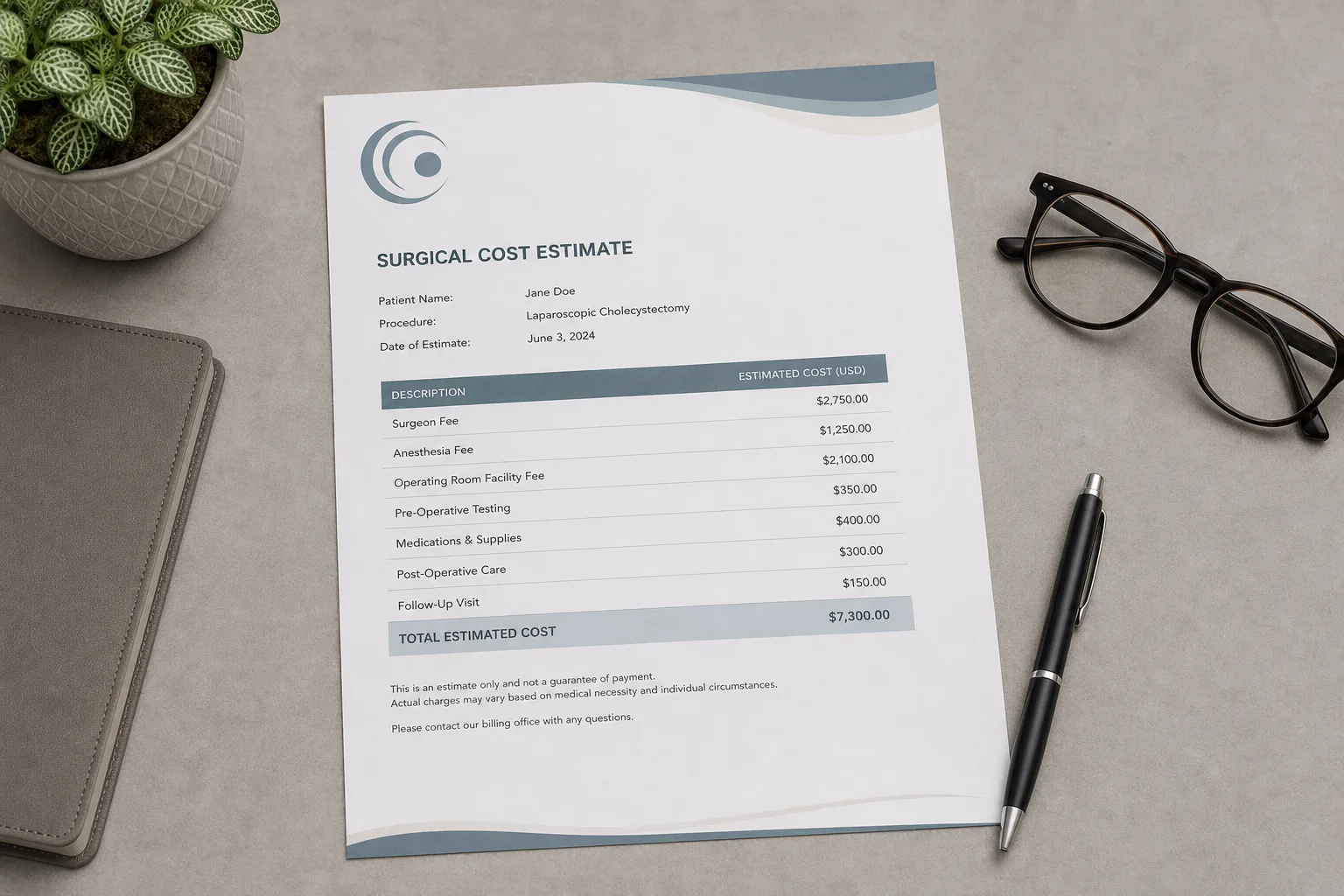
Three consultations, three numbers, and a spread wide enough to make you wonder whether you were quoted for the same operation. You probably were not. Not because anyone lied, but because a cosmetic surgery quote is not one price. It is three or four charges bundled at the practice's discretion, and the rules that govern each one are written at the state level.
Why there is no fee schedule to compare against
Almost everything else in American medicine is priced against something. A knee replacement has a procedure code, an insurer with a contracted rate, and an explanation of benefits that shows what was allowed and what was written off. Elective aesthetic surgery has none of that. It sits outside insurance almost entirely, so it never developed a reimbursement benchmark that patients or practices could point at.
That absence shaped how quotes look. Practices had to invent their own format, and most landed on some version of an all-in figure presented at the end of a consultation. What gets folded into that figure varies. Some quotes include the first year of follow-up visits. Some stop at the day of surgery. Some list anesthesia separately because the anesthesiologist bills independently and the practice cannot commit to another provider's fee.
The second thing that shaped modern pricing was where the surgery happens. Facial surgery moved out of hospital operating rooms and into accredited office-based suites and freestanding surgery centers over the past few decades. That move took the facility fee off the hospital's bill and put it onto the practice's, which is why two surgeons charging similar professional fees can quote very different totals. One owns the room. One rents it.
The four lines behind a single number
Ask for the quote broken out and you should see something close to this:
- Surgeon's fee. The professional fee for planning and performing the operation. Usually the largest line, and the one that reflects technique, operative time, and the surgeon's own market.
- Facility fee. The room, staff, equipment, and supplies, typically priced by the hour or in blocks of hours. A six-hour case does not cost the same as a three-hour case.
- Anesthesia fee. Billed by time as well, and by who administers it. An MD anesthesiologist, a nurse anesthetist, and a surgeon operating under local with oral sedation are three different cost structures.
- Post-operative care. Follow-up visits, garments, drains, prescriptions, and sometimes lymphatic massage or laser treatment for scars. This is the line most often left implied rather than stated.
If a practice hands you one figure and no breakdown, the breakdown still exists internally. Asking for it is normal.
How your state changes the number before you walk in
This is where geography stops being about cost of living and starts being about regulation. Several state-level rules move the total directly.
Office-based surgery rules
States differ on what a practice must have in place to perform surgery under deep sedation or general anesthesia outside a hospital. Some require accreditation by a recognized accrediting body or state licensure as an ambulatory surgical facility, with defined standards for equipment, emergency drugs, staffing ratios, transfer agreements, and adverse event reporting. Others regulate more lightly and rely on the medical board's general standard of care.
Accreditation is not free and it is not one-time. It carries survey fees, documented policies, drills, and equipment that has to be present whether or not it is used. Those costs live in the facility fee. A quote from a state with a strict office-based surgery rule is buying something a quote from a permissive state may not be.
Anesthesia scope of practice
Who may deliver anesthesia, and whether a physician must supervise, is set state by state. That single rule changes the hourly cost of the anesthesia line materially, and it also changes whether the fee arrives from the practice or as a separate bill weeks later.
Facility licensure and certificate of need
A handful of states require regulatory approval before a new ambulatory surgery center opens. Where that approval is hard to get, surgical suite capacity is scarcer, block time costs more, and facility fees follow.
Sales and excise tax
A small number of jurisdictions have applied sales tax or a specific excise to elective cosmetic procedures. Where such a tax exists, it usually appears on the invoice rather than in the quote. Worth asking about.
What moves the surgeon's fee, and what does not
Operative time is the honest driver. Deeper dissections take longer, require more anesthesia time, and occupy the room longer, so the effect compounds across three of the four lines. A deep plane facelift releases the retaining ligaments and repositions the deeper soft tissue layer rather than tightening skin over it, which is a longer case than a skin-only lift and is priced accordingly.
Other real drivers:
- Combined procedures. Adding eyelid surgery, a brow lift, fat grafting, or a neck component to the same anesthetic is usually cheaper per procedure than staging them, because the facility and anesthesia lines are shared.
- Revision work. Operating in a previously dissected field takes longer and carries different risk. Expect a higher fee than a primary case, not a discount.
- Anatomy and goals. Heavier necks, prior weight loss, and significant asymmetry all change the plan and the clock.
What should not move the number is urgency. A price that expires if you do not book today is a sales tactic, not a fee structure. The Federal Trade Commission oversees how consumer services are advertised and priced, including what a quoted price must actually include, and pressure closing sits awkwardly against that.
Ask these before the deposit clears
- Is this quote itemized into surgeon, facility, anesthesia, and post-operative care, and will any of those bill me separately?
- Where will the surgery take place, and is that facility accredited or state-licensed? By whom?
- Who administers the anesthesia, and what is their credential?
- What is the quoted operative time, and what happens to the facility and anesthesia charges if the case runs long?
- How many follow-up visits are included, and for how long?
- What is the written policy on revisions? Does the surgeon waive their fee only, or the facility and anesthesia too?
- Is the deposit refundable, and on what timeline? What happens if I reschedule?
- Are there taxes or administrative fees not shown here?
Get the answers in writing on practice letterhead. A quote that survives those eight questions intact is comparable to another quote that survived them, and that is the only comparison worth making.