A Timeline Instead of a Box: Preparing for a First Meeting With an Attorney
The first consultation is priced in time, and most of that time gets spent on work anybody could have done at a kitchen table the night before for nothing.
- Written by
- Ellen Marsh
- Published
- Filed under
- Legal
- Length
- 1,031 words, about 4 minutes
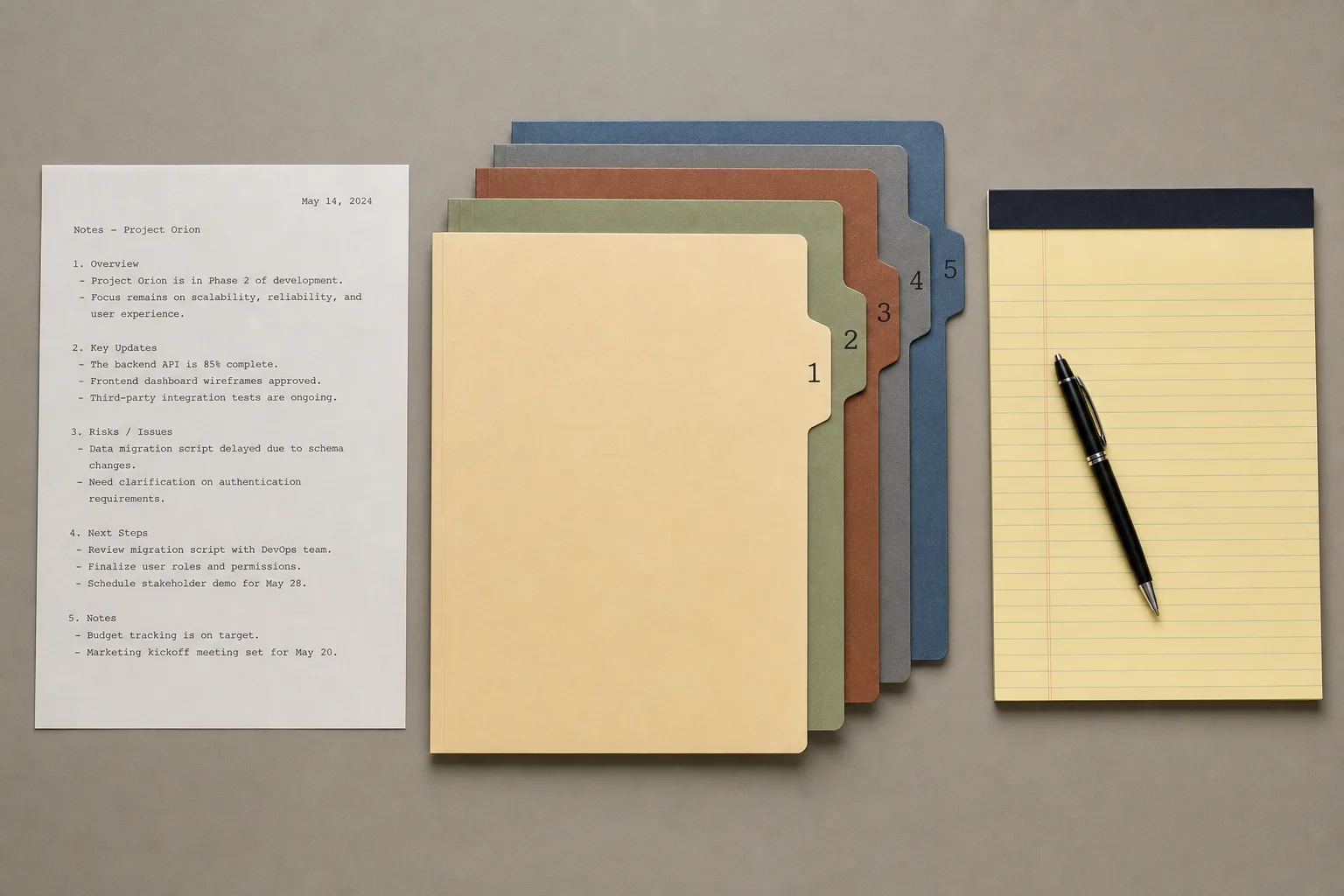
Picture two people with the same dispute walking into the same office on the same morning. One carries a banker's box of paper collected over eight months, in the order it arrived in the mail. The other carries a single typed page and four labeled folders. An initial consultation runs somewhere between half an hour and two hours, and whatever the fee arrangement, that time is the scarce thing in the room and it gets spent on whatever is put in front of the attorney. The two will leave with very different value, and almost the entire difference is preparation that required no legal knowledge at all.
Write the Timeline First, on One Page
One page, dated entries, plain sentences, nothing else. Every line carries three parts: the date, what happened, and which document or message records it. March fourth, signed the contract at the office, copy in folder A. March nineteenth, contractor said the permit had been filed, text message screenshotted into folder B. April twenty-second, first invoice for extra work that was not in the contract, invoice 1041. Written that way the page does three jobs at once. It puts the facts in the order an attorney has to receive them anyway, it exposes the gaps so you learn at your own table that a date cannot be supported, and it converts a story into evidence, which is a genuinely different object. Write it in the order things happened rather than the order they upset you, because those two sequences are rarely the same and the second is much harder to follow.
Order the Documents the Way the Timeline Names Them
Not chronologically by when you found them, and not by category. In timeline order, numbered, with the number written onto the timeline entry it belongs to. Contracts and any signed amendments go in complete, including the reverse of every page, since the terms that matter are frequently printed there. Written communications go in as complete exported threads rather than cropped screenshots, because a partial thread invites a question about what was taken out of it. Then invoices, receipts, canceled checks or payment records, photographs with their dates intact, and anything sent by the other side, whether a demand, a denial or a notice.
Bring copies you can leave behind and keep the originals in your own hands. If a court date exists or a deadline has already been served, that piece of paper goes on top of the stack rather than in sequence, because it changes the order of everything the attorney is about to advise and there is no version of the meeting where it should surface in the last ten minutes.
Write Down the Question You Actually Want Answered
One or two sentences at the top of the page, and it is harder than it sounds and more valuable than anything else you will produce. Can I stop paying the remaining balance without losing the deposit. Is there a deadline I have already missed. How does this most likely end, how does it end at worst, and what does each of those cost me. Is this worth settling, and at roughly what number. Questions in that shape produce answers in the same shape, while a vague question consumes exactly the same billable time as a precise one and returns a fraction of the value.
Know Your Own Numbers Before You Walk In
Three figures, written down before anyone offers an opinion. What the dispute is genuinely worth, calculated rather than estimated, because the calculated number is often smaller than the felt one. What has already been spent on it, including your own hours if those hours have a real cost attached. And what you are willing to spend to resolve it, which has to be decided in advance precisely because it anchors every later conversation and it is the figure that stops a matter from consuming more than it could ever recover. An attorney can tell you the strength of a position with real authority. Only you can say what that position is worth pursuing.
Ask the Fee Questions Out Loud, in the Room
Not afterward and not by email a week later. Ask how the work is billed, whether hourly, flat fee, contingency or a mix that changes by phase. Ask what the smallest billing increment is and whether a two-minute phone call is billed at it. Ask what costs sit outside the fee entirely, meaning filing fees, service, experts and copying. Ask for an estimate of total cost to the next milestone rather than to final resolution, since the second number is rarely knowable and the first almost always is. And ask who actually performs the work and at what rate, because the answer is frequently not the person across the table.
An engagement letter will follow and it will answer all five in writing. Asking out loud first tells you whether the written version is going to contain anything you did not expect, and a firm that answers plainly in the room tends to write plainly afterward.
What to Leave at Home, and What to Leave With
Leave the box. A carton of unsorted paper hands the sorting job to somebody billing by the hour, and the sorting is the one part of this you can do perfectly well yourself. Leave out the history of the relationship that has no bearing on the legal question, which matters enormously to you and is genuinely part of the story but is not part of the analysis, and an hour spent on it is an hour not spent on the answer you came for.
A good first meeting produces four things: a plain statement of whether you have a claim or a defense, the deadlines that apply to it, the realistic range of outcomes, and a written fee arrangement or a clear description of one. If you leave with sympathy and nothing else, book with somebody else. Prepared properly, that hour quite often ends with the most useful advice an attorney can give anybody, which is that the problem is smaller than it looked from inside it and here is the letter you can send yourself.