A Fifty-Year Shingle on a Twenty-Year Roof. Who Actually Decides the Lifespan
Shingle warranties, nailing zones and ventilation clauses are written by a party who never visits your house, and they decide more about your roof's lifespan than the brand does.
- Written by
- Roy Castellano
- Published
- Filed under
- Property
- Length
- 1,112 words, about 5 minutes
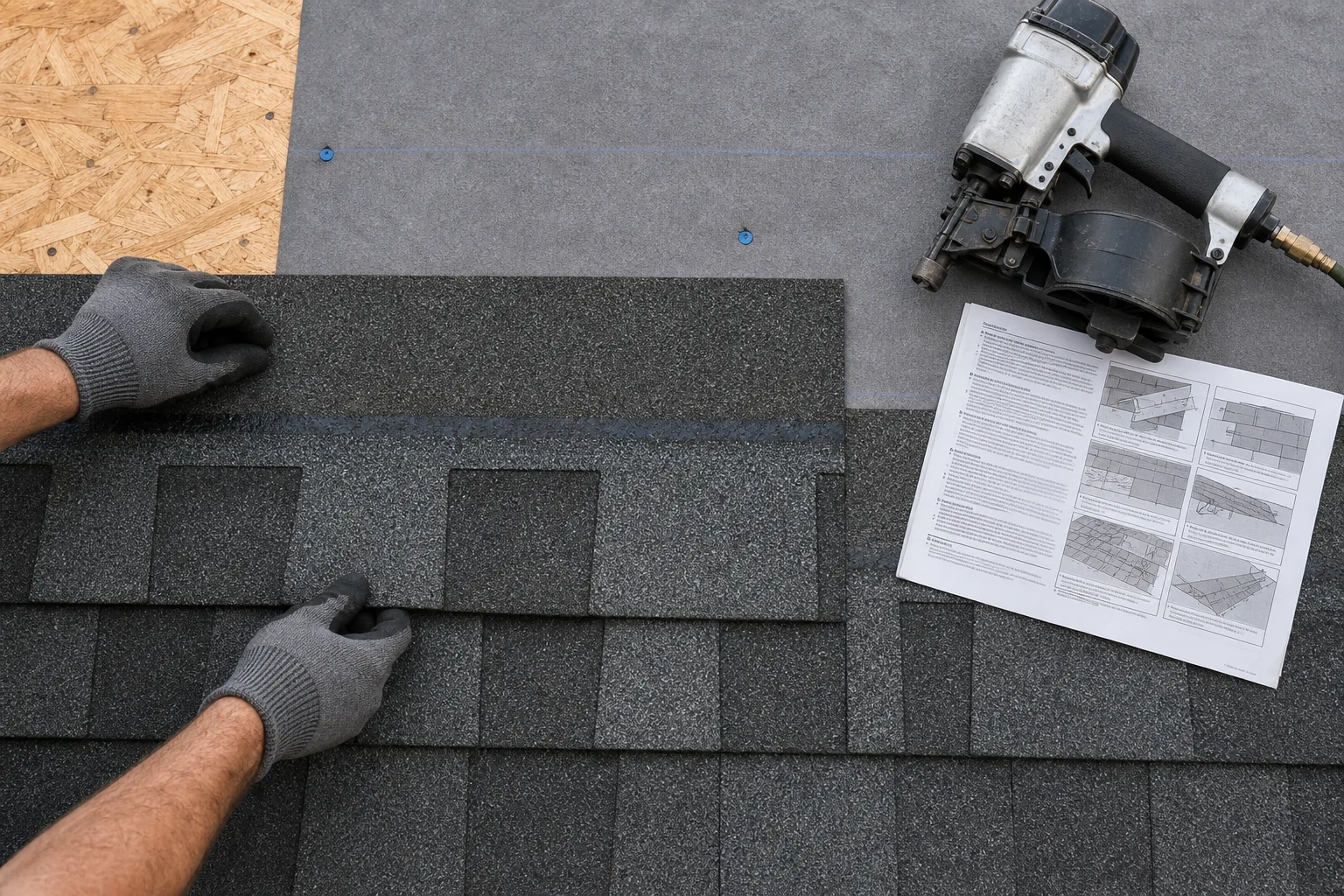
Two contractors quote the same house with the same shingle, same color, same square count. One number is thirty percent higher. The homeowner assumes the gap is profit, or crew size, or how badly someone wants the work. Sometimes it is. More often the gap is made of things a third party wrote down years ago, in a document neither contractor handed over and the homeowner never asked to see.
That third party is the manufacturer. It is not in the room, it never sees the house, and it has more say over how long the roof lasts than either person signing the contract.
Where the lifespan number on the box came from
Asphalt shingle warranties started as a straightforward claim about the product: a certain weight of asphalt and felt would hold up for a certain number of years. Weight was the shorthand for quality, which is why old-timers still talk about a 235-pound shingle. Then fiberglass mats replaced organic felt in the 1980s and weight stopped tracking durability. The industry needed a new shorthand, and it reached for time.
So the labels went to 20-year, 25-year, 30-year, and eventually to lifetime. The numbers climbed faster than the product improved, because the number was a marketing position competitors had to match. What kept it from being pure fiction was the structure underneath: most of these warranties are prorated. Full replacement coverage applies for a short initial period, often the first decade, and after that the payout drops on a schedule until it is worth very little. A fifty-year warranty is not a promise of fifty years of roof. It is a promise of a declining credit against material cost, and material is the smaller half of your bill.
The Federal Trade Commission is responsible for the rules governing how written warranties on consumer products are disclosed, which is why the prorated schedule and the exclusions are printed somewhere rather than left implied. They are printed. They are just printed where nobody looks.
The document that actually defines a good job
Every shingle line ships with installation instructions, and those instructions are the only written standard most residential roofs are ever measured against. They are specific in ways that surprise people:
- Nail count and placement. Four fasteners in a defined nailing zone is standard; six in high-wind applications. The zone is often less than an inch tall. High nails miss the shingle below and the wind rating is gone.
- Starter course. A purpose-made starter strip at eaves and rakes, not a cut-down field shingle flipped backward.
- Ventilation. Nearly every warranty conditions coverage on intake and exhaust ventilation meeting a minimum ratio. A roof with ridge vent and no soffit intake is a roof the manufacturer has already declined.
- Deck condition. Minimum sheathing thickness, fastener holding capacity, no more than a specified number of layers.
- Underlayment and ice barrier. Where it goes, how far up the slope, how much it laps.
None of that is exotic. It is the ordinary content of a manufacturer's printed sheet. What makes it useful to a homeowner is that it converts a vague question (is this crew any good?) into a checkable one (did they follow the instructions for this specific product?). When you ask a roofer how the ventilation on your house measures against the warranty requirement for the shingle being quoted, you learn a great deal from how quickly the answer comes.
Why the exceptions exist, and what they tell you
Manufacturer warranties carve out labor, flashing, and anything the manufacturer did not make. That carve-out is not arbitrary. It exists because the manufacturer cannot control the parts of the job that fail first.
Roofs rarely fail in the field. They fail at transitions: chimneys, valleys, sidewalls, pipe boots, the step flashing behind a dormer. Field shingles sit there shedding water for decades. The flashing at a chimney is where a leak actually begins, and reused flashing on a new roof is the single clearest marker of a barely adequate job. It saves a few hundred dollars in material and an afternoon of labor, and it puts twenty-year-old metal under thirty-year shingles.
Same logic for pipe boots. The rubber collar on a plumbing vent is a consumable. It cracks long before the shingles do. A quote that specifies new boots and new step flashing is describing a different job from one that says "reuse existing where serviceable," even when the shingle line is identical.
Comparing materials without pretending the numbers are equal
Published service lives for roofing materials are ranges conditioned on installation and climate, and the ranges overlap more than the brochures suggest. A few honest framings:
- Architectural asphalt is the default because the cost per square is low and almost any competent crew can install it correctly. Its real-world life is set mostly by attic ventilation and by how hot the deck runs.
- Standing seam metal lasts longer than asphalt and costs substantially more. The variable is the fastener system and the panel clips, not the coating everyone talks about.
- Concrete and clay tile outlive the underlayment beneath them. The tile is not the wear item. The felt is, which means a tile roof gets rebuilt at some point without the tile being replaced.
- Synthetic slate and shake trade the weight problem for a warranty problem: the product is newer than its stated lifespan, so the claim rests on accelerated testing rather than fifty years of roofs.
The comparison that matters is not lifespan against lifespan. It is lifespan against how long you intend to own the house, against the structure's ability to carry the weight, and against what the next reroof will cost when it comes.
What to get in writing before you sign
Four items, and all four are ordinary requests:
- The exact shingle line and the manufacturer's installation instructions for it.
- The ventilation calculation for your attic, with intake and exhaust listed separately.
- A line for flashing that says replace, itemized by location.
- The warranty document itself, both the material warranty and the contractor's workmanship term, with the prorate schedule visible.
Contractors who do careful work tend to have these on hand, because the same paperwork protects them when a claim is filed years later. A registered or extended manufacturer warranty usually requires the installer to be certified by that manufacturer and to submit the job, which quietly aligns everyone's interests.
The absent party in the transaction wrote the rules before anyone climbed the ladder. Reading what it wrote is the cheapest step in the entire project, and it is the one that tells you which of your two quotes is describing the roof you thought you were buying.