Insulating a Garage? Four Routes, Four Bills, and What the Quote Leaves Off
Batts, rigid foam, spray foam or a new door: how the four common ways to insulate a garage are actually priced, and which costs hide outside the quote.
- Written by
- Ellen Marsh
- Published
- Filed under
- Property
- Length
- 1,408 words, about 6 minutes
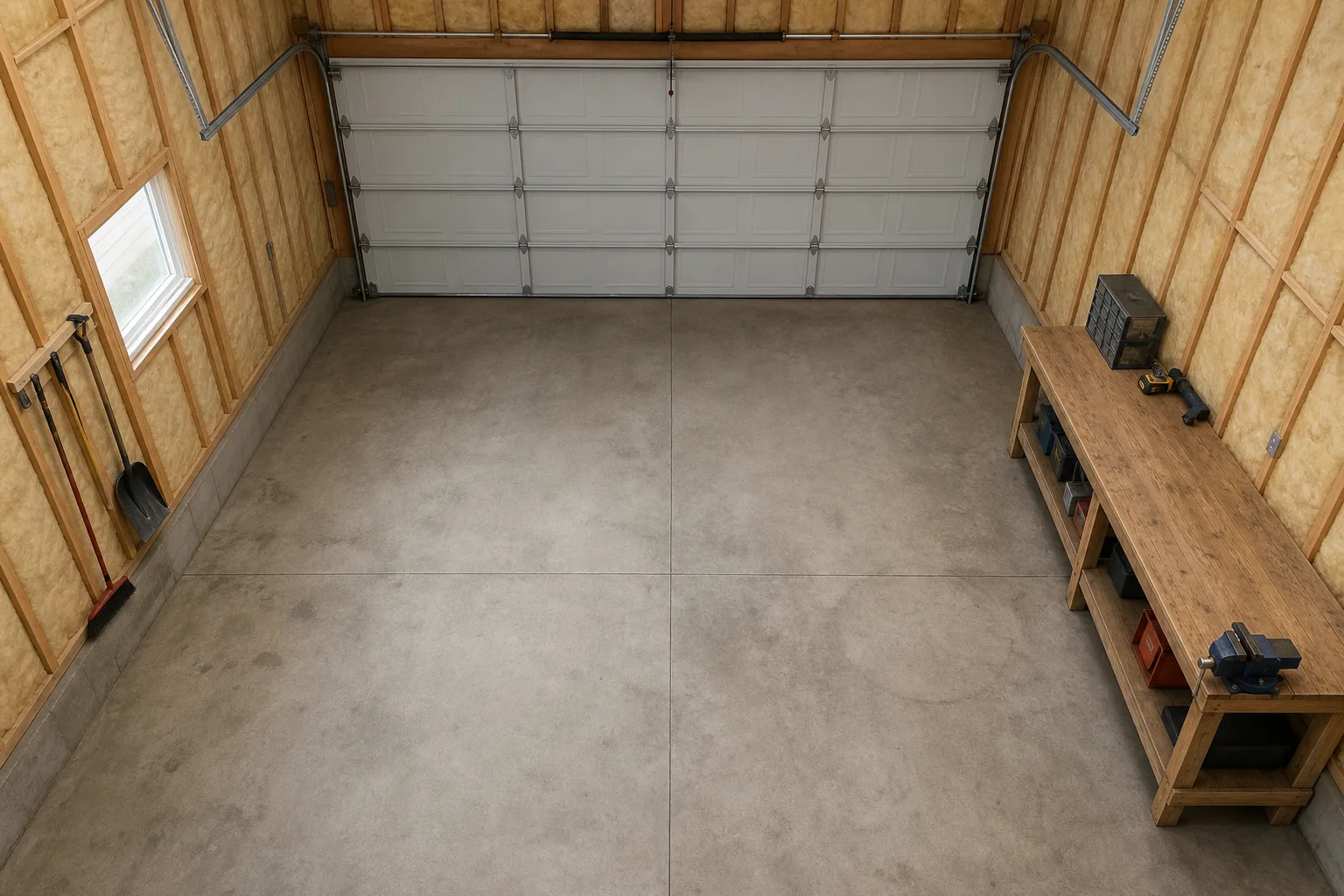
A garage was built to keep rain off a car. Nobody framed it expecting you to stand in it in January. So when you ask three companies what it costs to insulate one, you get three numbers that are not measuring the same job, and none of them tell you which parts of the price you control.
The useful question is not "what does it cost." It is "what am I being billed for, and how much of that is material versus everything that has to happen around the material." On most garage jobs the insulation itself is the cheapest line on the invoice.
Four routes, and what each one is actually selling
Nearly every pitch you will hear is a version of one of these.
| Route | What you pay for | What moves the price |
|---|---|---|
| Fiberglass or mineral wool batts | Material by the square foot, plus labor if you are not doing it | Cavity depth, whether walls are open, how much cutting around obstructions |
| Rigid foam board | Board by the sheet, fasteners, tape, sealant | Thickness, how many cuts, whether it goes on the inside face or the ceiling |
| Spray foam | Mobilization, crew time, cubic feet of foam at a target thickness | Open cell versus closed cell, inches applied, masking and prep, minimum job charge |
| Insulated garage door, or a kit for the one you have | A product, plus install or an afternoon | Door construction, whether the opener and springs still suit the weight |
Batts are the cheapest per square foot and the most forgiving of a DIY weekend. They also demand a cavity to live in and something to hold them there. If your garage walls are bare studs, that is a straightforward job. If they are already finished, batts are off the table unless you open the walls, and now you are pricing demolition.
Rigid foam is the route people land on when the walls are block, brick, or already covered. It sits on the face of the wall rather than inside it, so you lose an inch or two of room width per wall. The material cost is predictable. The labor is in the cutting, the taping, and furring out something to screw finish material to.
Spray foam is the one with the mobilization charge. A crew shows up with a rig, and that trip costs the same whether your garage is one car or three. Small garages therefore price badly per square foot. Spray foam air seals as it insulates, which is its real argument, because in a garage the air leaks usually matter more than the R-value on the bag.
The door is its own purchase and belongs in its own paragraph, below.
What actually drives the number
Four things move a garage insulation quote far more than the brand of insulation.
1. Square footage of ceiling, not just walls
People price walls and forget the ceiling. In a detached garage the ceiling is often the single largest uninterrupted surface and the one losing the most heat. In an attached garage with living space above, the ceiling assembly may already be insulated and the job shrinks considerably. Measure both before you compare bids, because a quote that covers walls only against one that covers walls and ceiling is not a comparison at all.
2. Whether anything has to be opened or closed
Open stud bays are cheap to fill. Finished walls are expensive to insulate because the cost is removal and replacement, not insulation. On the other end, once you put insulation in, most people want it covered. Drywall, tape, and a coat of paint on a two car garage is frequently a bigger line than everything that went behind it.
3. The attached garage fire separation
If the garage shares a wall or ceiling with the house, that assembly usually has to meet a fire separation requirement, which in practice means a specified drywall type and finish on the garage side. Your local building department sets and enforces this. It is not optional, it is not expensive on its own, and it is the single most common thing a low bid has quietly skipped. Ask directly which walls the quote treats as separation walls.
4. Air sealing and the door
A garage leaks around the door perimeter, at the bottom seal, where the top plate meets the roof framing, and around every penetration someone drilled over thirty years. Sealing those is a few hours and inexpensive materials. Skipping them and installing thicker insulation is how people end up with an expensive garage that is still cold. The Department of Energy is the federal body responsible for residential energy efficiency guidance, and air sealing before adding insulation is the standard order of operations for a reason.
The door is a separate decision with its own math
Garage door insulation is sold two ways, and the pitches are not comparable.
A retrofit kit is foam panels or batts you cut and fit into the door's existing panel cavities. Material cost is modest. The install is an afternoon with a utility knife. What the kit box does not mention is weight. Adding mass to a door changes the balance, and a door that is out of balance works the opener harder and shortens the spring's life. A spring adjustment afterward is a service call. Budget for one and be pleased if you do not need it.
A new insulated door is a sandwich: steel skin, foam core, steel skin. It is manufactured as a thermal unit, so it performs closer to its stated value than a kit does on a single skin door. It also replaces the weatherstripping, the bottom seal, and usually the track hardware, which is where a lot of the actual leakage was.
The number on the sticker is the trap. A door advertised at a given R-value is quoting the center of a panel, not the whole door with its joints, perimeter, and seals. Ask instead what the door's thermal performance is as an installed assembly, and if the salesperson cannot answer that, treat the panel number as marketing and compare doors on construction: steel gauge, core type, number of sections, and seal design.
Which route suits which household
Match the spend to how you actually use the space, not to how you imagine using it.
- Storage and a car, nothing more. You want to stop the cold floor and the drafty door, not create a room. Weatherstrip, replace the bottom seal, insulate the ceiling if there is living space above, and stop. This is the lowest spend with the highest proportional return.
- A workbench you use on weekends. Batts in open walls, insulate the ceiling, seal the door, add a modest heater you run only when you are in there. Finish the walls with cheap sheet goods rather than full drywall and paint if the fire separation rules allow it on that wall.
- A gym, office, or anything you occupy daily. Now the air sealing has to be thorough, the door probably has to be replaced rather than stuffed, and you need to think about moisture and a heat source you can run continuously. This is the version where spray foam's mobilization charge finally makes sense, because you are buying the air seal, not the R-value.
- A detached garage with no services. Price the electrical before the insulation. A heated space you cannot run a circuit to is an expensive storage unit.
How to make three quotes comparable
Hand every bidder the same scope in writing: which surfaces, what finish, whether the door is in or out, and who handles the permit. Then ask each of them three things.
- Which surfaces does this price cover, in square feet, and what is the target R-value for each?
- What finish material is included over the insulation, and does any of it need to meet the fire separation requirement?
- What is excluded? Name it. Electrical, door hardware, spring adjustment, debris removal, permit fees.
The third question does the most work. A quote that comes back with a short, specific exclusion list is from someone who has done this before. A quote with no exclusions at all is a quote that will grow.
Insulating a garage pays off cleanly when the scope matches the use. Decide what the room is for, seal it before you thicken it, and price the door as its own purchase rather than a line item buried in someone else's total.