Wide Shot, Medium, Close: Building a Complaint File That Holds Up Later
Evidence assembled after a dispute begins is worth a fraction of evidence collected while the work was still going on, and the difference is mostly dates.
- Written by
- Ellen Marsh
- Published
- Filed under
- Legal
- Length
- 885 words, about 4 minutes
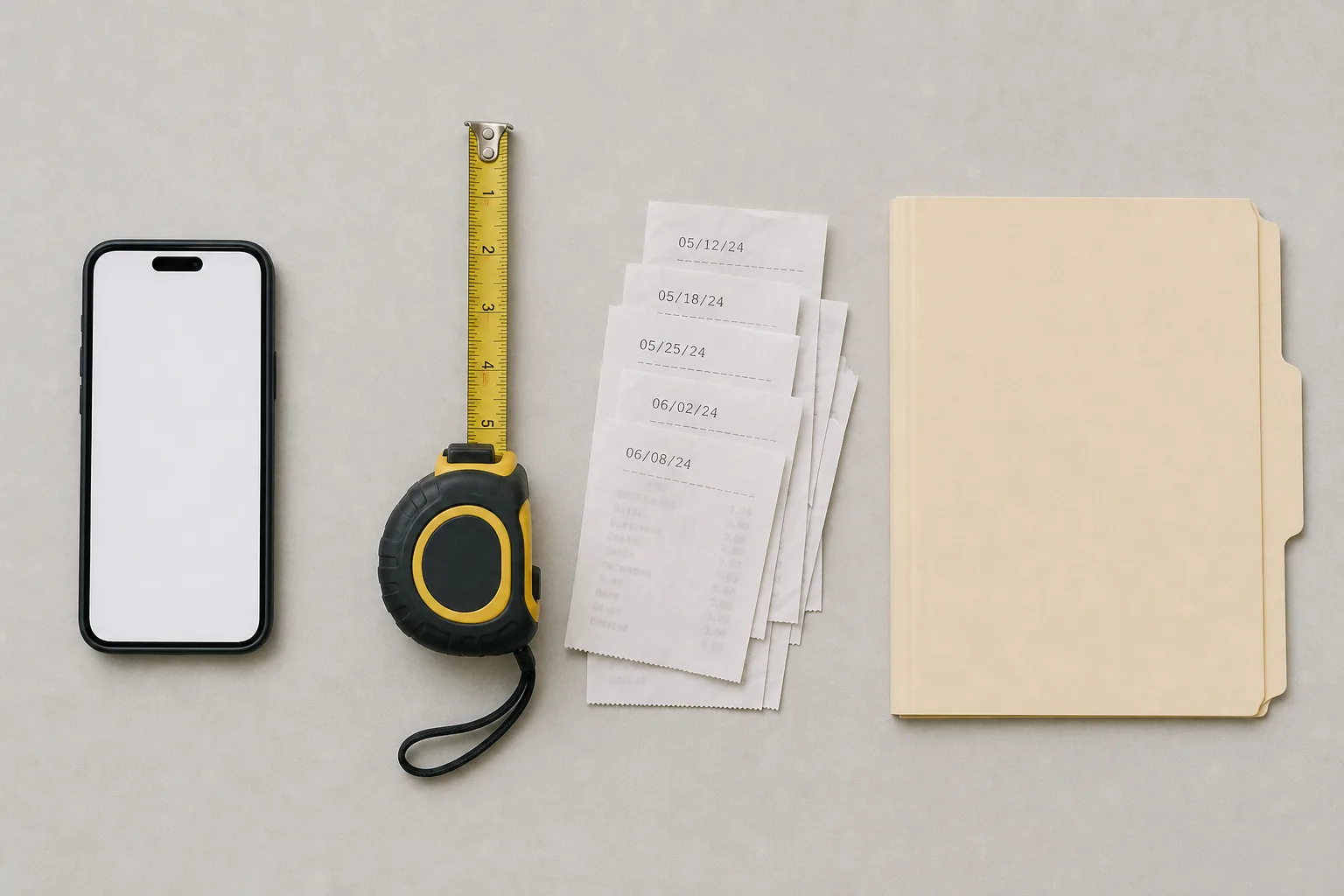
Picture the folder most people bring to a dispute: a handful of phone photographs taken the week they lost patience, a couple of forwarded emails, an invoice, and a memory of several conversations nobody wrote down. Now picture the same dispute documented from the day the problem was first noticed rather than the day somebody decided to complain, which are usually weeks apart. The second folder is not merely larger. It is a different kind of object, because everything in it was recorded before anybody had a position to defend, and that is precisely what gives it weight later.
Photographs, and the Two Mistakes Almost Everyone Makes
The first mistake is photographing only the defect, since a close-up of a crack proves that a crack exists somewhere in the world. Take three frames of everything instead: a wide shot establishing the room, a medium shot showing where in the room the problem sits, and then the close-up. The second mistake is failing to establish scale or date, which is solved by putting a tape measure or a coin in the frame, leaving the camera's date settings alone, and never cropping or editing, because an unedited original with intact metadata answers a question that a cropped copy only raises.
The photographs nobody takes are the ones with the most value. Before any work starts, walk the space and photograph everything in its current condition, including the parts nobody expects to be touched. It costs about five minutes and it is the only way anybody will ever prove what a wall, a floor or a ceiling looked like before somebody worked next to it.
Written Communication, Kept Whole
Move the conversation into writing early and politely, which in practice means sending a short message after any significant phone call confirming what was agreed. That reads as organized rather than aggressive, and it converts a conversation into a record without anybody objecting to the conversion. Export whole threads rather than screenshots of the useful part, since a complete thread is credible and a cropped one invites a question about what came out. And keep the envelope, because a postmark establishes when something was sent and a delivery confirmation establishes when it arrived, both of which matter the moment a notice period or a contractual deadline enters the picture.
The Documents That Carry the Most Weight
The signed contract comes first and it has to be complete, meaning every page including the reverse of the page and any attached specification, along with amendments and change orders carrying signatures. The original estimate matters nearly as much, because the difference between the estimate and the final invoice is frequently the entire dispute in one subtraction. Then invoices and proof of payment, whether card statements, canceled checks or transfer confirmations, since cash paid without a receipt is the single hardest fact to establish afterward. Permits and inspection records are public documents obtainable from the building department, and they establish independently whether work was permitted and whether it passed. Manufacturer documentation for materials belongs in the file too, particularly installation instructions, since a failure to follow them is a specific and provable defect rather than a matter of taste.
The Running Log, Written the Same Day
One page, one line per event, added on the day the event happens. Each line carries the date, what happened, who was present and where the supporting document lives in the folder. A log written contemporaneously is treated quite differently from a narrative composed afterward, which is the entire reason to keep one, and it is also why the entries should stay short and factual. Record the observation now and save the assessment for whenever somebody asks for it.
What Weakens a File, and Where It Should Live
Four things damage a file and all four are avoidable. Gaps invite a question about what happened during the six weeks nothing was recorded. Edited images destroy their own value, since enhancing a photograph to show a defect more clearly is indistinguishable from enhancing it to create one. A single intemperate message becomes the exhibit the other side opens with, however justified the anger was. And paying a disputed invoice in full without a written statement that it is paid under protest quietly undercuts the argument that it was ever disputed. Keep two copies, one of them somewhere other than the house the dispute concerns, back photographs up off the phone automatically, scan paper as it arrives, and name every file by date first so the whole set sorts itself chronologically with no effort at all.
What the File Is Actually For
Most disputes never reach anybody who will read a file end to end, which sounds like an argument against building one and is the opposite. The real work happens far earlier, because a complaint that arrives carrying dated photographs, the relevant contract clause quoted accurately and a clean chronological log tends to get resolved at a lower level inside the other organization. The person receiving it can see immediately how it would look if it traveled upward, and that is usually enough. Ten minutes a week while the work is still going on produces that folder. Assembling the same material after the fact takes days and produces something visibly weaker, which everyone who reads it can tell.