Claim Denied? Five Things to Check Before You Write a Word of the Appeal
A denial letter is a document with a code, a deadline and a named review level. Read those five things first, then appeal in the order the plan actually recognizes.
- Written by
- Ellen Marsh
- Published
- Filed under
- Health
- Length
- 1,208 words, about 5 minutes
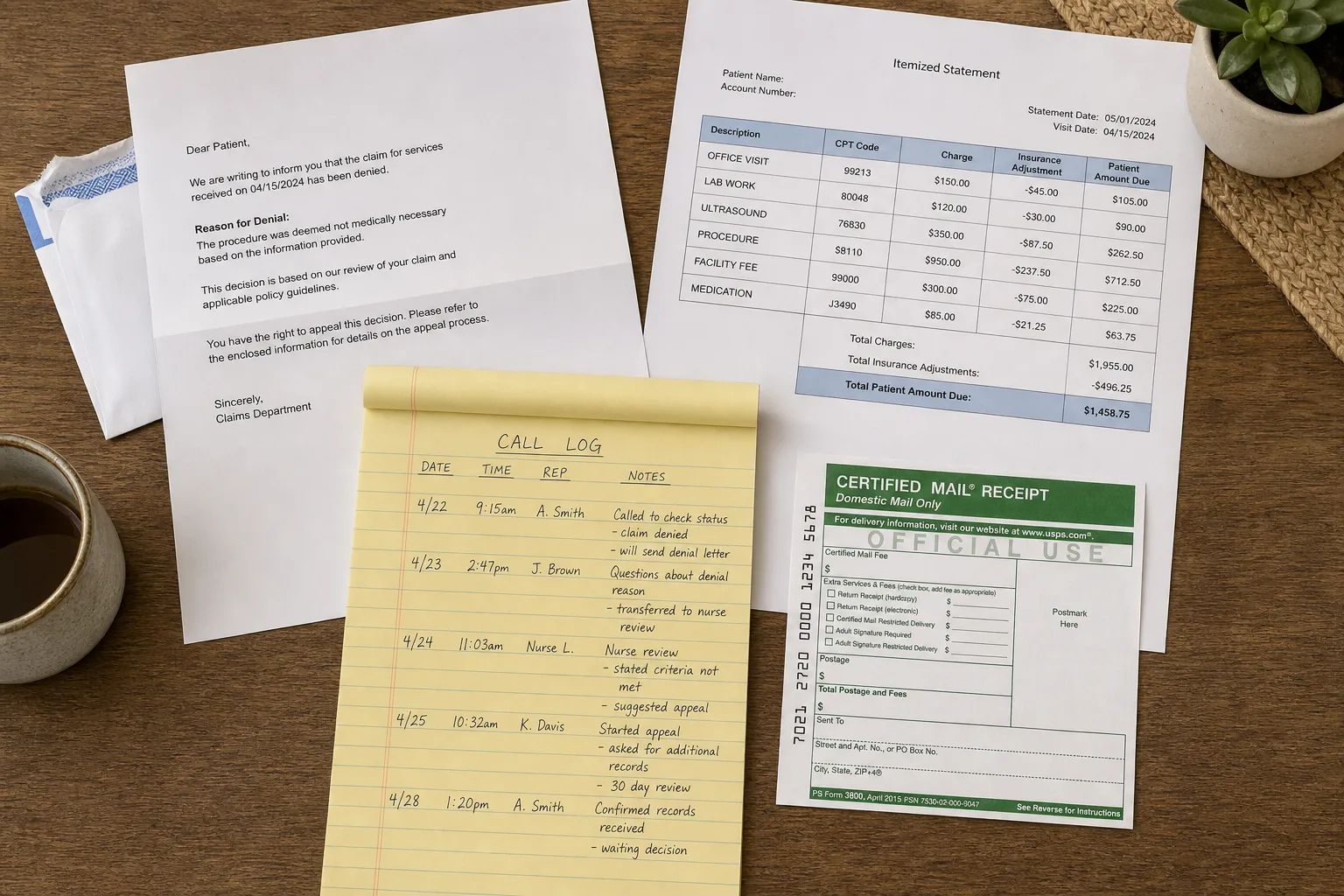
The letter arrives looking final. It usually is not. Most denials are administrative before they are medical or factual, and the difference between an appeal that gets read and one that gets filed away is almost entirely paperwork: the right document, sent to the right review level, before the right date.
What follows assumes you are one household with one denial and no legal department. That is the normal case, and it is manageable, but only if you do the reading before the writing.
Five things to check before you draft anything
1. The reason code, not the reason sentence
Every denial carries a code. On a health plan it shows up on the explanation of benefits and on the denial letter itself. On a property or auto claim it appears as a cited policy provision. The plain-English sentence next to it ("services not medically necessary," "not covered under your plan") is a summary written for volume, not for you.
The code tells you what kind of denial you have, and the kind determines everything downstream:
- Coding or billing error. Wrong modifier, wrong place-of-service, missing referral number. Nobody assessed the merits. This gets fixed by a corrected claim from the provider's billing office, not by an appeal from you.
- Eligibility or timing. The plan says you were not covered on the date of service, or the claim came in past the filing window. Fixable with a document.
- Prior authorization missing. Sometimes retro-authorization is available. Sometimes the provider ate the error and cannot bill you at all.
- Medical necessity or coverage judgment. Someone made a decision. This is the only category that truly needs an appeal with an argument in it.
Three of those four are not arguments. They are corrections. Spending two weeks writing a persuasive letter about a wrong place-of-service code is two weeks you will not get back.
2. The appeal deadline, and which calendar it runs on
Find the date on the letter and find the number of days. Then work out whether the clock runs from the date on the letter, the date you received it, or the date of service. They are not the same and letters are frequently dated several days before they are mailed.
Write the deadline on the outside of the folder. Then set a reminder two weeks earlier. Deadlines on appeals are enforced far more consistently than any other part of the process.
3. Which review level you are on
Denial letters name the level. First-level internal appeal, second-level internal appeal, external review. If you send a second-level argument to a first-level reviewer you have not skipped ahead, you have wasted a level. Each level generally allows a fresh submission of evidence, and once you exhaust them you cannot go back.
The letter is also required to tell you how to request the plan documents behind the decision. Note the address and note whether that request is separate from the appeal itself. It usually is.
4. What the plan says it relied on
A denial that cites a clinical guideline, an internal coverage policy or a specific policy exclusion has told you what to attack. Ask for that document in writing. For an employer-sponsored health plan, you are entitled to the criteria used, and asking for it costs a stamp.
If the letter cites nothing specific, that is worth noting in the appeal itself. A decision that names no standard is harder for the plan to defend at external review than it is at internal review.
5. Whether the amount is even yours to owe
Before appealing, check whether the denial actually creates a bill for you. On in-network health claims, some denials fall on the provider by contract and cannot be balance-billed to the patient. On a property claim, check whether the denied portion was a sublimit rather than a refusal.
Call the provider's billing office and ask, in these words: is this amount patient responsibility, or is it a provider write-off. Get the answer with a name and a date attached.
The paperwork that makes it manageable
One folder, physical or digital, per denial. Not per insurer, per denial. Inside it:
- The denial letter and the envelope it came in, if the postmark matters.
- The explanation of benefits or claim summary for the same service.
- The itemized bill, with codes, from the provider. Not the one-line statement.
- The relevant pages of the plan document or policy, printed, with the cited section marked.
- Any clinical records, photographs, receipts or estimates that speak to the specific reason given.
- A single-page call log.
The call log does more work than anything else on that list. Date, time, phone number dialed, name of the person, reference or call number, what they said, what they committed to. Insurers record their side. You should have yours. When a second representative contradicts the first, the log is the only thing that turns that into a fact rather than a memory.
Send everything by a method that produces proof of delivery. Certified mail, or an online portal that generates a confirmation number you can screenshot. Fax confirmation pages still count and some plans still prefer fax. Keep the confirmation in the folder.
The order the appeal actually goes in
- Correction first, if it is a correction. Call the provider's billing office. Ask them to rebill. Give them fourteen days, then call back. This resolves a large share of denials without an appeal existing at all.
- Request the documents. Plan language, coverage criteria, the claim file. Do this on day one, in parallel with everything else, because it takes the longest to arrive.
- First-level internal appeal. Short cover letter naming the claim number, the date of service, the denial code and the specific reason it is wrong. Attach the evidence. Do not narrate your feelings about the insurer. Reviewers read files, not sentiment.
- Second-level internal appeal, if the plan has one. Add whatever the first denial revealed. A letter from the treating physician addressing the exact criterion cited carries more weight here than anything you can write yourself.
- External review. An independent reviewer outside the plan. For most health plans this is available once internal appeals are exhausted, and the decision binds the insurer. For expedited situations you can sometimes run it concurrently.
The Department of Labor oversees employer-sponsored group health plans and the claims and appeals procedures they must follow, which is why the structure above looks similar across most workplace coverage regardless of the carrier's name on the card.
What the denial letter does not volunteer
It will not tell you that the first reviewer may not be a clinician. It will not tell you that a peer-to-peer call between your physician and the plan's reviewer is often available and often faster than a written appeal. It will not tell you that your state insurance department takes complaints and that filing one puts a case number on the file.
Ask for all three. Each one is a normal request, and each one changes who is reading your paperwork.
Sort the denial into its category, get the deadline onto a calendar, and keep the log. Most households that get a reversal get it because the file was tidy enough to be read in one sitting.