Eleven Years of Premiums and a Short Check: The Condition Attached to Replacement Cost
A policy can be current, fully paid and still settle a partial loss for less than the repair costs, because of a condition riding along with replacement cost coverage.
- Written by
- Roy Castellano
- Published
- Filed under
- Money
- Length
- 999 words, about 4 minutes
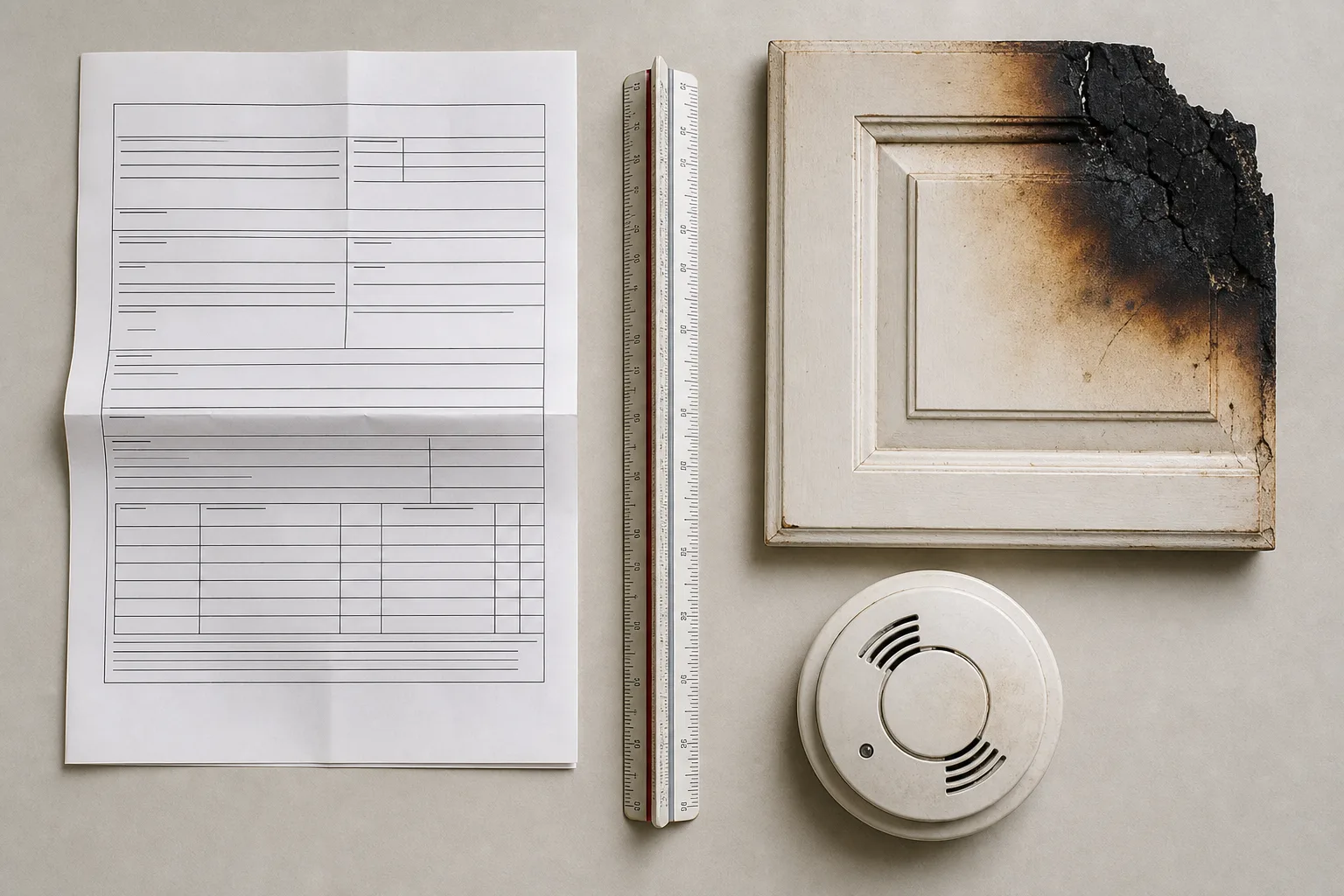
A grease fire in a rental duplex took out one kitchen, part of the ceiling above it, and the wiring inside that section of wall. The building was insured, the premium had been paid every year for eleven years, and the contractor's estimate to put it back came to a figure the owner reasonably expected the policy to cover. The settlement offer arrived materially lower than that, and nothing had been denied. The reduction came from a condition rather than an exclusion, and the condition had been printed in every renewal packet since the policy was first written.
The Condition That Rides Along With Replacement Cost Coverage
Policies settling on a replacement cost basis usually attach wording along these lines: the insurer will pay the full cost of repair without deduction for depreciation only if, at the time of loss, the amount of insurance carried on the building is at least eighty percent of its full replacement cost, and otherwise will pay the larger of actual cash value or a proportion of the repair cost determined by the ratio the insurance carried bears to the amount required. Three consequences follow from that sentence. It bites on partial losses, which is nearly all of them, since a total loss is capped by the policy limit regardless. The test runs against replacement cost at the time of loss rather than the purchase price, the market value or the assessed value. And the penalty is proportional rather than all or nothing, which is why it grows quietly as the gap widens.
How the Arithmetic Runs, in Ratios Rather Than Dollars
Work it as a fraction and it stops being mysterious. Take the required amount as eighty percent of what rebuilding the structure would cost today, divide the limit actually carried by that required amount, and the fraction you get is what the policy applies to the cost of repair before the deductible comes off. A building insured at three-quarters of the required amount therefore settles a partial loss at roughly three-quarters of the repair, less the deductible, with the owner funding the remaining quarter out of whatever reserves exist.
Widen the gap and the shortfall widens with it, landing entirely on the party who never knew the condition was there. The effect on small claims is worth noticing separately, because a loss only slightly above the deductible can produce almost no net payment at all once the proportion has been applied, which is a useful thing to work out before filing rather than after.
Why the Gap Opens Without Anyone Doing Anything Wrong
The limit was correct on the day it was set. It stopped being correct on its own, through four ordinary movements that no owner is expected to notice as they happen. Construction costs move independently of property values, so materials and labor can climb sharply through a period when sale prices sit flat, and it is the first pair rather than the second that drives rebuild cost. Improvements go unreported, since a finished basement, an added bathroom or an upgraded kitchen each raise replacement cost and none of them notify an insurer.
The other two are quieter. Inflation guard endorsements raise the limit automatically each year by a set percentage, which helps and is not a valuation, so a few years of construction inflation running above the endorsement rate reopens the gap without anybody being told. And code upgrade requirements accumulate, because rebuilding a damaged portion to current standards can cost more than reproducing exactly what was there, and coverage for that difference is often a separate endorsement carrying its own sublimit.
The Three Documents That Should Have Been in the File
None of them are difficult to obtain and most owners have never seen the first one. A replacement cost estimate less than a few years old is the number the entire condition depends on, and an agent can run one, as can an independent estimator. A record of improvements with their dates and costs, sent to the agent as they happen rather than assembled in the week after a loss, keeps the estimate honest. And the declarations page read alongside the conditions section is the pairing that matters, because the declarations show the limit while the conditions state what that limit has to be at least equal to.
Fixing It Costs Considerably Less Than the Exposure
Raising a building limit is among the cheapest adjustments available on a property policy, since the rate applies per unit of coverage and the base charge is already sitting there. Closing a meaningful gap frequently moves the annual premium by less than a single month's rent on the unit being insured, which is the kind of arithmetic that makes the conversation short. Ask the agent in writing for the current replacement cost estimate the limit rests on and the date it was produced, compare it against the declarations page and the eighty percent threshold named in the conditions, and ask what an ordinance or law endorsement would add if the policy does not already carry one.
How This One Ended
The owner accepted the proportional settlement, paid the difference out of reserves, and then had the building estimated again from scratch. The revised limit raised the annual premium modestly and closed a gap that had been widening for the better part of a decade without producing a single symptom anybody could have seen. The kitchen was rebuilt, the tenants moved back in, and the policy that had quietly stopped fitting the building now fits it again.
What that owner bought with the shortfall was a piece of knowledge available for nothing. The conditions section of a property policy takes about fifteen minutes to read, it arrives in the mail once a year, and it reaches exactly the same conclusion as an eleven-year claim history and a fire. That is the whole argument for opening the packet the next time it comes, rather than filing it unopened behind the one before it.