Should You Wait for the Weatherization Program or Take the Utility Rebate This Month?
Two programs can pay for the same attic. One covers more and takes a year to reach you, the other covers less and clears in a few weeks.
- Written by
- Ellen Marsh
- Published
- Filed under
- Policy
- Length
- 1,073 words, about 5 minutes
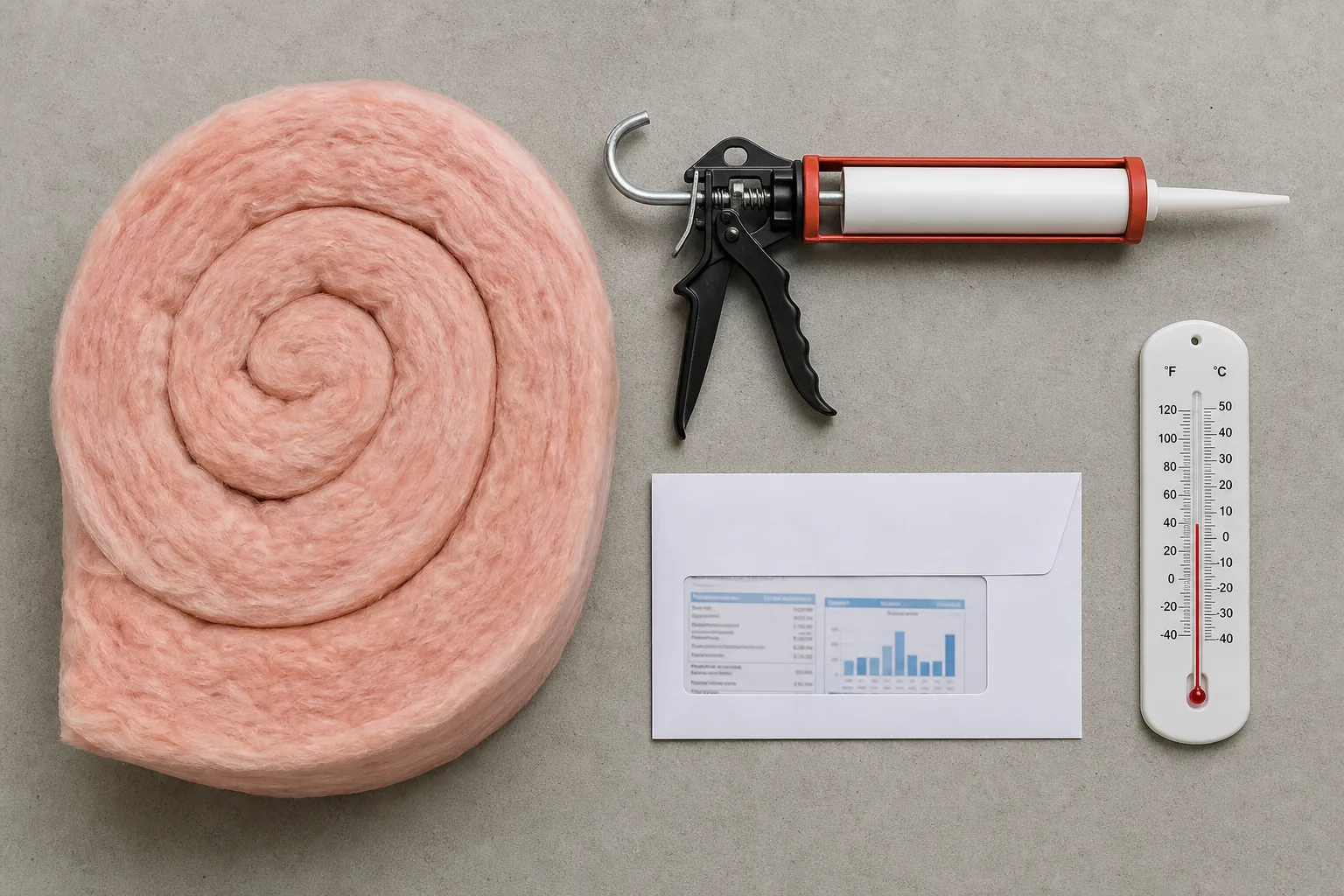
A household with a cold back bedroom and an attic that has plainly never been touched has two plausible routes to getting the work done at reduced cost, and in a one-paragraph summary the two look almost interchangeable. One is an income-qualified weatherization program, funded federally and delivered through a state office and a local agency. The other is a rebate from whichever utility supplies the gas or the electricity. They cover overlapping work, they are both real, and they behave so differently in practice that choosing between them on the summary is how households end up waiting through a second winter.
One Is a Service and the Other Is a Discount
The weatherization program is a service delivered to the house. An agency sends an auditor, the auditor runs a diagnostic assessment rather than a walk-through, the agency schedules a crew, and the work happens at little or no cost to a qualifying household. What the household gives up is choice: it does not select the contractor, does not set the scope, and does not front the money. Federal weatherization assistance sits with the Department of Energy and reaches households through state offices and local agencies, which explains why the eligibility rules feel national while the experience feels entirely local.
A utility rebate is the opposite arrangement in every respect. The household hires a contractor, pays the invoice in full, submits documentation afterward, and receives a payment or a bill credit some weeks later. The household chooses the contractor, sets the scope within whatever the rebate list allows, and carries the whole cost in the meantime. Neither structure is better in the abstract, and which one suits a given house depends far more on cash on hand and urgency than on the headline value of the offer.
The Differences That Decide It
Four differences do most of the work. Qualifying is income-tested with priority categories on the program side and open to essentially anyone on the utility's service on the rebate side. The share of cost covered runs to most or all of it up to a per-home cap under the program, against a portion, often a set amount per measure, under the rebate. Money out of pocket is nothing under the program and the full invoice under the rebate. And the wait runs from months to more than a year under the program, against a few weeks after completion under the rebate.
The fifth difference is scope, and it is the one people forget to ask about. A weatherization crew does whatever the audit identifies as priority, which may not be what the household came in wanting, while a rebate pays only for measures printed on the current list, which may not include the thing the house most needs. Both constraints are reasonable and both are invisible until somebody reads the fine print, so reading it first is worth an evening.
Why the Queue Exists at All
Eligibility and availability are set by entirely different mechanisms, and the gap between them is what surprises households most. Eligibility is a rule: published, stable, and determinable in an afternoon with a pay stub and a phone call. Availability is a budget divided by a cost per home, administered by an agency running a fixed number of crews through a fixed number of weeks. Two consequences follow. A waiting list does not move faster because more people qualify, and a household sitting near the eligibility line may wait behind households in priority categories such as older residents, homes with a disabled occupant, or homes with a small child. None of that is a reason to skip applying. It is a reason not to build a plan around a date.
When Waiting Is the Right Call
The program wins outright where the household clearly qualifies on income and falls into one of the priority categories, because the wait shortens considerably and the value delivered is high. It wins where the needed work is extensive, meaning air sealing, attic insulation, duct repair and possibly heating equipment together, since that combination exceeds anything a rebate list would return. It wins where there is simply no capital available to front a contractor's invoice, which is the constraint that quietly decides most of these choices. And it wins where the house has diagnostic problems nobody in the household can identify, because a real audit with a blower door and a duct test is genuinely valuable on its own terms.
When the Rebate Is the Right Call
The rebate wins where the household sits above the income threshold, which removes the other route entirely and makes the comparison academic. It wins where the work is a single defined measure that appears on the current list, since the paperwork is proportionate and the money arrives quickly. It wins where timing is the binding constraint, because a furnace failing in February does not wait for a queue and no household should be asked to. And it wins where the household wants to pick the contractor, or already has one whose work they know and trust, which is worth more than most people credit.
The Sequence Most Households Miss
The two routes are not mutually exclusive when taken in sequence. A household can apply to the weatherization program, remain on the list, and separately use a rebate for an urgent measure while waiting, and the eventual audit will simply find that measure already done and move to the next priority on its list. Two cautions attach. Check whether the rebate requires pre-approval before work begins, because a great many do and a retroactive application is frequently rejected outright. And tell the agency what has been completed, so the audit does not duplicate it and waste a visit.
Four calls in one week settle the whole question. Ask the state weatherization office for the current income threshold and the approximate length of the list in your county, both of which they answer routinely. Read the utility's efficiency page for this year's measure list and its pre-approval rule, since these change annually and last year's list is not reliable. Check whether a separately funded local program exists, which is common in larger municipalities and easy to overlook. And get one contractor estimate regardless, because it sets the scale that every other number is measured against. Either route ends with a warmer bedroom. Asking first is how a household finds out which winter that happens in.