Peak Season Starting in Three Weeks? Run the Overtime Numbers Against the Hiring Numbers
Overtime looks expensive by the hour and frequently is not, once recruiting, training and the risk of a quiet August are counted on the other side.
- Written by
- Ellen Marsh
- Published
- Filed under
- Corporate
- Length
- 1,004 words, about 4 minutes
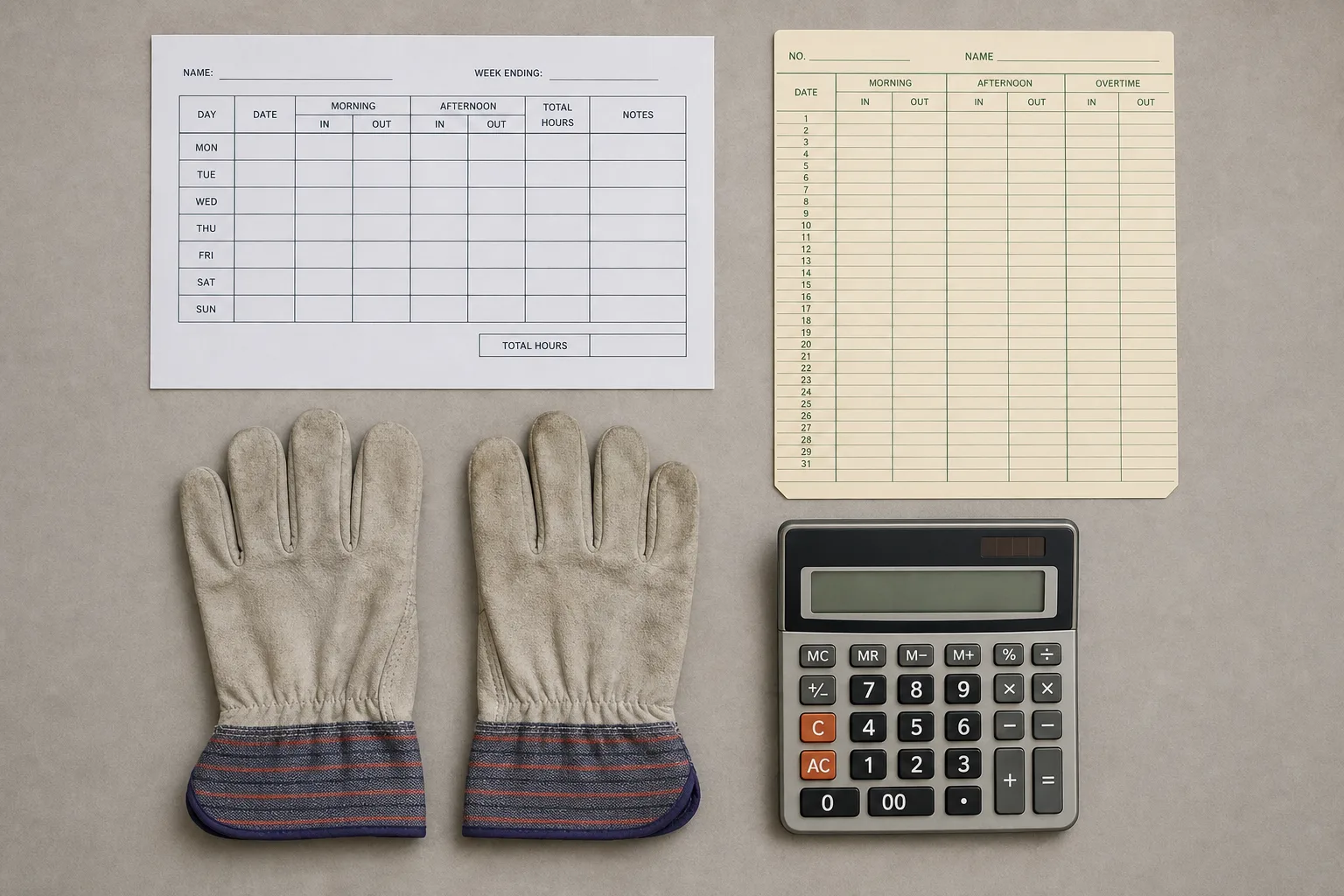
Demand starts climbing in the second week of May and stays high until Labor Day, which is a familiar shape in a great many trades and a familiar decision along with it. The existing crew can cover the peak by working longer hours, or people can be added for the season, and both are entirely defensible answers. What usually decides it is the sticker shock of the premium rate rather than any comparison of totals, and that instinct is wrong often enough to be worth checking properly before the season starts rather than in the middle of it.
What Overtime Actually Costs, and What Makes It Cheaper Than It Looks
The premium rate is the visible part. Non-exempt employees receive at least one and a half times their regular rate for hours worked beyond forty in a workweek, several states add a daily threshold or a doubled rate above a further limit, and the regular rate itself includes more than base pay, which is where employers most often calculate it wrong. Those rules are administered by the Department of Labor alongside the relevant state agency, and getting the calculation right at the start of a season is considerably easier than correcting it across twelve weeks of timesheets afterward. What the premium buys, though, is a set of costs that simply do not appear: no recruiting, no onboarding, no training time, no extra equipment or vehicle seat or workspace, full productivity from the first hour on work the person already knows, and an arrangement that scales down instantly when the season ends with nobody to separate.
What Fatigue Does to the Same Arithmetic
The other half of the overtime picture is that output per hour falls as weekly hours climb, and it falls faster after several consecutive weeks rather than in a straight line. Error rates rise with fatigue and so do injury rates, and a single serious injury can exceed the entire seasonal labor budget it was meant to save. There is also a personnel cost that no spreadsheet captures, which is that the people asked to work the extra hours are the most capable ones, and the most capable ones are also the most able to leave. Beyond a certain point the ceiling is physical rather than financial: the crew cannot cover the work at any rate of pay, and an employer who discovers that in July has discovered it too late to hire.
What a Seasonal Hire Actually Costs Across Twelve Weeks
In a short engagement the wage is the smallest component, because the fixed costs never get time to spread themselves out. Recruiting and screening time counts at the cost of whoever does it. Onboarding paperwork, equipment and any required safety training all arrive up front. Supervised ramp-up consumes an experienced person's hours alongside the new person's own. Payroll taxes, unemployment insurance and workers' compensation apply at the relevant class rate from the first check.
The variable that decides the whole question is ramp time expressed as a fraction of the season. A role somebody becomes productive in inside a week is an excellent candidate for seasonal hiring, since the payback period is short and most of the engagement is contribution. A role taking six weeks to learn inside a fourteen-week season spends the majority of its existence being subsidized, and no wage rate low enough to fix that exists.
The Conditions That Point Each Way
Overtime is favored where ramp time is long, where the peak lasts weeks rather than a full season, where the extra hours needed per person are modest, where the work is skilled and judgment-heavy, where the crew actively wants the hours, and where demand is uncertain enough that committing to a payroll would be a forecast rather than a plan. Seasonal hiring is favored on the mirror image of every one of those: a short ramp, a genuinely full season, a volume of extra work amounting to something close to another shift, work that is defined and supervisable, a crew with no appetite for longer weeks, and a book of business already committed rather than hoped for.
The Option Most Employers Skip
The split is available and rarely considered. Cover the opening weeks and the tail of the season on overtime, and bring seasonal people in for the middle stretch where the peak runs deepest and the ramp has time to repay itself. That arrangement also solves the recruiting problem sideways, because it means hiring in June for a role starting in June rather than committing in April against a demand forecast nobody can yet see. The crew works the hours during the parts of the season where the hours are manageable, and the additional people arrive at the point where their training cost has the longest runway left to earn out.
Four Things to Get Right If You Do Hire
Say in writing that the role is seasonal and name an expected end date, because ambiguity here produces a difficult conversation in September and can affect unemployment claims afterward. Classify correctly, since seasonal does not mean exempt from wage and hour rules and it certainly does not make somebody a contractor. Assign one trainer rather than letting a seasonal hire learn from four people, which produces four systems and mastery of none inside twelve weeks. And decide in advance which of them you would keep, because the best seasonal hires are the cheapest permanent hires available anywhere, already trained and already assessed against real work.
Tell those people in August rather than in October, when they have found something else. Then run the number that settles the original question: total additional hours the season needs, divided by the weeks, divided again by the crew already on the payroll. A handful of extra hours per person per week and overtime wins on almost any assumption. Anything approaching a second shift and no premium rate covers it, which means the hiring decision was made for you back in May by the shape of the work itself.