Not a Waiting Period: What Acclimating Wood Flooring Actually Requires You to Measure
Acclimation is not elapsed time. It is bringing two materials to the same moisture content, and a calendar cannot tell you when that has happened.
- Written by
- Nadine Buckley
- Published
- Filed under
- Property
- Length
- 897 words, about 4 minutes
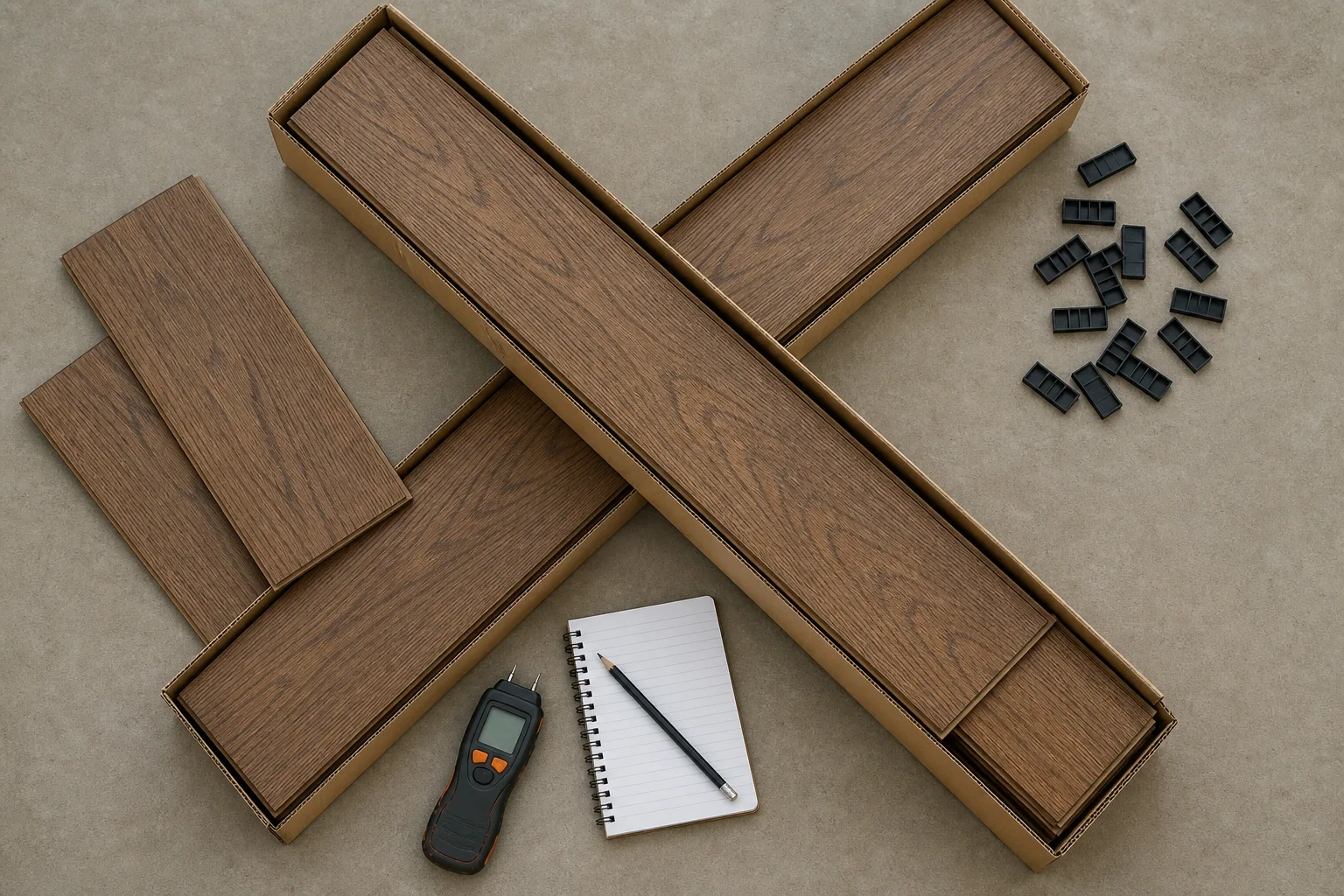
The instruction almost always arrives as a number of days. Leave the boxes in the room for three days, or five, or a week, and then the floor can go down. That framing is so widespread that most homeowners believe acclimation is a waiting period, and the belief causes more failed floors than it prevents, since a week measures nothing. Acclimation is a moisture condition rather than elapsed time, and the only way to know it has been reached is to put a meter against the material.
What Is Actually Happening to the Wood
Wood exchanges moisture with the surrounding air until it reaches equilibrium with it, and the moisture content it settles at is determined by the temperature and the relative humidity around it. Flooring arrives at whatever moisture content the mill and the supply chain happened to leave it at, while the subfloor sits at whatever the house has produced over the preceding months. Where those two numbers differ, the flooring will move after installation until they agree, and that movement appears as gaps in one direction or as cupping and buckling in the other. The goal is therefore not to wait at all. It is to bring the flooring, the subfloor and the room into one condition and then install.
The Conditions That Have to Exist First
Acclimating material in a room that is not yet at its normal living conditions accomplishes nothing, because the wood equilibrates to a state that will not persist once the household actually moves back in. Before any boxes come into the space, the wet work has to be finished and dry, since concrete, plaster, drywall compound, paint and tile mortar all release large volumes of moisture and a room that smells damp is a room that is still changing.
Three further conditions belong on the same checklist. The building has to be closed in with windows and exterior doors installed. Heating or cooling has to be running at the temperature the household will genuinely keep rather than at a construction setting. And the humidity has to be inside the range the manufacturer states in its instructions, which is usually a band rather than a single figure. In an occupied house all of this is easy. In new construction or a gut renovation it is precisely the step that gets skipped, because the schedule is tight and the material has already been delivered.
How to Stack the Material So Air Reaches It
Boxes stacked tight and left sealed do not acclimate at all, whatever the calendar says, because air has to reach the boards for any exchange to happen. Bring the boxes into the room where the flooring will actually be installed rather than into a garage or a basement. Open them or cut the ends so air can circulate, unless the manufacturer specifically directs that they stay sealed, in which case follow that instruction because their stated timing assumes it. Cross-stack with spacers between layers where the material is loose, keep the stacks off exterior walls and away from vents and direct sun, and leave enough room to walk around them, since you are going to be taking readings from several places.
The Readings That Decide It, and the Number to Watch
A pin or pinless meter set for the species, plus a notepad, covers the whole exercise. Measure the flooring by taking readings from several boards across different boxes and different parts of the stack, because boards on the outside reach equilibrium well before boards in the middle and it is the middle that tells you whether the material is genuinely ready. Then measure the subfloor in several locations including near exterior walls and any plumbing.
The figure that matters is not an absolute value on either material. It is the difference between the two, and manufacturers publish a maximum acceptable spread between flooring and subfloor moisture content, stated in percentage points and set tighter for wide boards than for narrow ones. Take readings on arrival and again every day or two, and when the flooring readings stop changing and the spread against the subfloor sits inside the published limit, acclimation is complete. That might be two days and it might be three weeks, and the meter is the only thing entitled to decide which.
Three Ways It Goes Wrong, and What to Put in Writing
Installing on the calendar rather than on the meter is the commonest failure by a wide margin, and it happens because a crew arrives on the scheduled day and lays whatever the readings happen to be. Acclimating in the wrong place is second, since a garage or an unconditioned basement brings material into equilibrium with conditions the finished room will never see. Over-acclimating in the wrong season is third, where material left for weeks in an unusually humid house takes up moisture it will spend the next winter losing. Ask the installer three questions before the job and write the answers down: what moisture readings will be taken and will they be recorded, what is the manufacturer's acceptable spread for this specific product, and what happens to the schedule if the readings are not there on the installation date. A contractor who answers all three readily is one who does this properly, and recorded readings matter again later, because a warranty claim on a moisture-related failure asks for exactly that documentation.