Two Neighbors, One Hailstorm: What Depreciation Does to a Ten-Year-Old Roof Claim
The same storm produces two very different checks depending on one line in the declarations page, and the gap widens every year the roof gets older.
- Written by
- Nadine Buckley
- Published
- Filed under
- Money
- Length
- 1,036 words, about 4 minutes
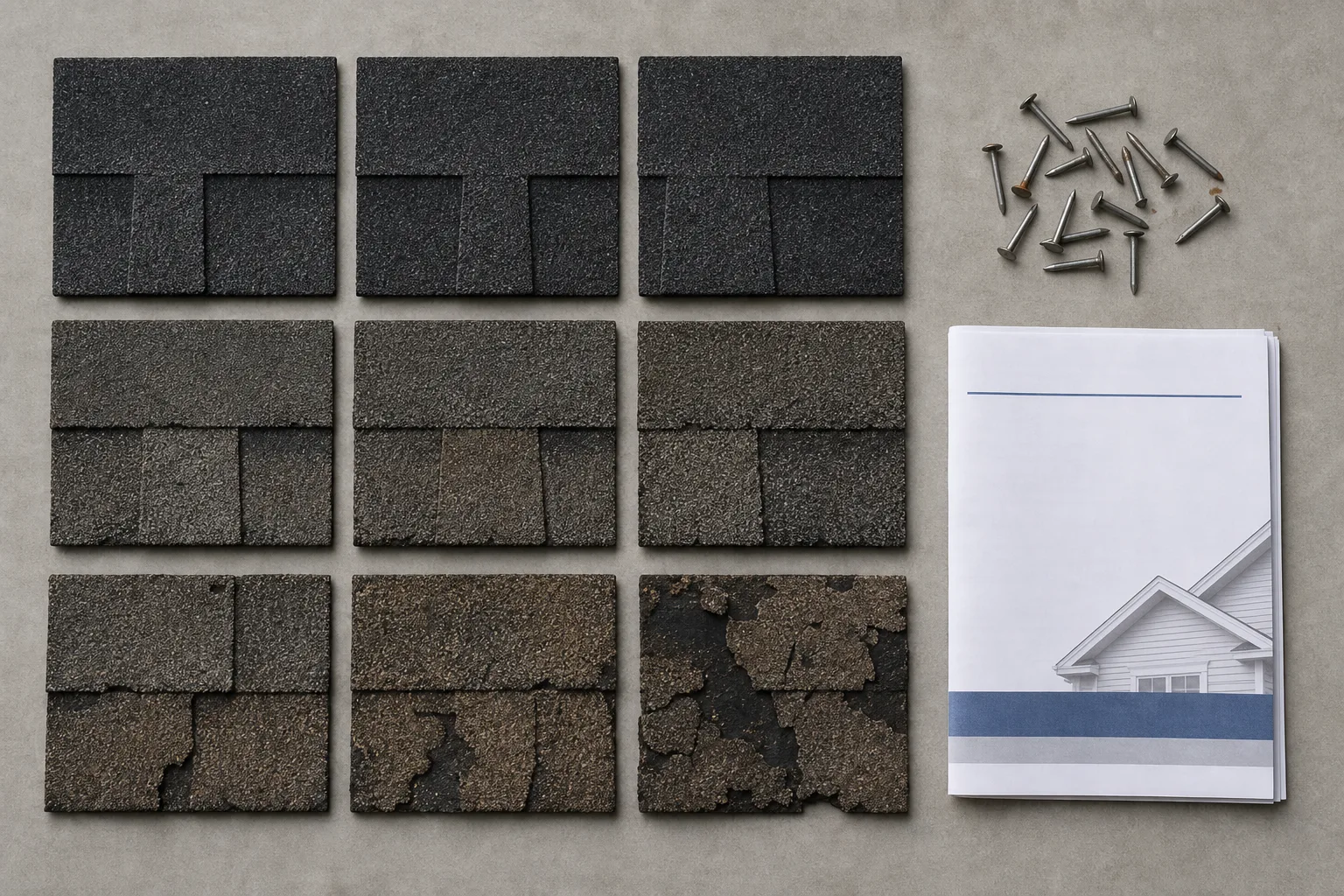
Two neighbors lose shingles in the same hailstorm on the same afternoon. Both are insured with reputable companies, both have paid every premium on time for years, and both file within the week. One receives enough money to put a new roof on the house. The other receives a fraction of that and is told, correctly, that the claim has been paid in full. The difference is one line on the declarations page describing how losses to the roof get settled, and the mechanism behind that line explains both why insurers offer two versions and why the cheaper one keeps getting cheaper as the roof ages.
Why Insurers Offer Two Settlement Bases at All
Insurance is priced against expected loss, and a roof is an item with a finite service life that wears out whether or not weather ever arrives to finish it. If every policy replaced a three-quarters-used roof with a brand new one each time a storm took the last of it, the policy would be funding maintenance rather than insuring a loss, and the premium would have to be set accordingly for everybody. So the two bases exist side by side. Replacement cost pays what it costs to put back what was there in materials of like kind and quality, with no subtraction for age or wear. Actual cash value pays that same figure minus depreciation, where depreciation stands for how much of the expected life had already been used up, so a roof halfway through settles for roughly half and one three-quarters through for roughly a quarter.
How a Replacement Cost Check Actually Arrives
This is the part that surprises people, and it is not a trick or a delay tactic. Replacement cost policies almost always pay in two stages. The first check is the actual cash value amount less the deductible, issued after the adjuster's inspection, and it is often called the initial payment. The second check is the recoverable depreciation, released once the work has actually been completed and a final invoice has been submitted.
The logic is straightforward enough once stated: replacement cost coverage pays for replacement, so it pays the balance at the point replacement happens, and if the work is never done the depreciation is never recovered and the settlement simply stays at actual cash value. Two practical consequences follow. The household has to fund the gap between the two checks or find a contractor willing to work to that schedule. And the policy contains a deadline for completing the work and claiming the balance, usually stated in months, sitting in the conditions section, and very easy to run past while waiting on a busy roofer in the spring after a bad storm.
The Two Bases Set Against Each Other
Set side by side, the differences are few and they all point the same direction. Replacement cost produces a check sized to put the roof back new, costs a higher premium, arrives in two stages with the balance on completion, and leaves the household funding the deductible plus the depreciation only until the work finishes. Actual cash value produces the same figure less the service life already spent, costs less every year, arrives as a single payment, and leaves the household funding the deductible plus a depreciation share that never comes back. The last row is the one that matters most over time: the age of the roof does nothing at all to the replacement cost number, while it widens the actual cash value shortfall every single year.
The Endorsement That Converts One Into the Other Quietly
Many policies on older homes carry an endorsement applying actual cash value settlement to the roof specifically while the rest of the dwelling stays on replacement cost. It appears at a policy change, or at a renewal, or as the condition on which coverage was offered at all after an inspection, and it goes by several different names depending on the carrier. What it looks like on the page is a line referring to roof surfacing, to windstorm or hail losses specifically, or to a payment schedule keyed to the age of the roof. On any house whose roof is past the middle of its life, that line is the most consequential thing on the declarations page and it is very rarely raised in a renewal conversation.
Which Basis Suits Which Household
Replacement cost earns its higher premium where the roof is relatively new, since the depreciation gap being insured against is small today and large in eight years, and where a household could not comfortably fund a full reroof out of savings if the storm arrived next month. It earns it particularly clearly in places where hail and wind claims are a recurring feature of the climate rather than a rare event, because the exposure repeats.
Actual cash value is a perfectly defensible choice in three situations. Where the roof is near the end of its life and replacement is already planned, since the settlement will be modest either way. Where the premium difference is large and there are reserves genuinely capable of absorbing the shortfall. And where it is simply the only offer on the table, which happens routinely on older roofs and is worth accepting rather than going uninsured while shopping.
What to Do This Month, Whichever One You Have
Find the age of the roof and write it down somewhere it will not be lost, since it is the input every other calculation here depends on and almost nobody can produce it under pressure. Photograph the roof from the ground on a clear day, so a record of its condition exists from before any storm rather than only after. Read the declarations page for the roof settlement line and read the conditions for the completion deadline. Then ask the agent one plain question: what would it cost to move the roof onto replacement cost settlement, and would the company even offer it on this house. That answer takes about five minutes to obtain and it determines the size of a check that may be needed in a hurry, which is most of what a household actually wants from a policy on the week after a storm.