Same Hailstorm, Two States, Two Payouts. What the Rating and the Local Rulebook Decide
Impact ratings, wind classes, percentage deductibles and code upgrade coverage all vary by state and county, and together they decide what a storm claim actually pays.
- Written by
- Nadine Buckley
- Published
- Filed under
- Property
- Length
- 1,137 words, about 5 minutes
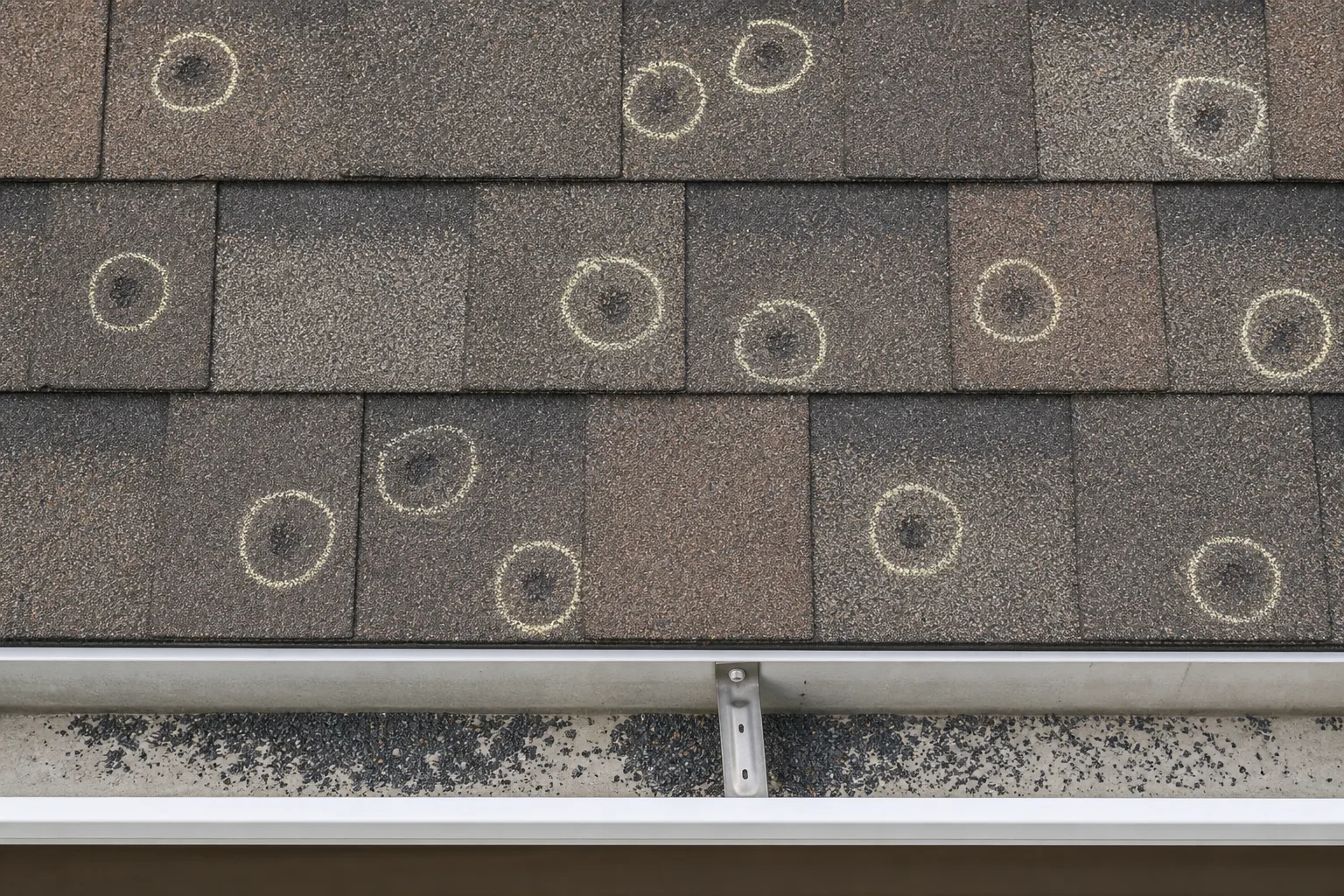
Two houses take the same hail. One owner gets a full roof replacement plus the cost of bringing the deck up to current code. The other gets a check that covers three slopes at depreciated value, minus a deductible calculated as a percentage of the dwelling limit. Neither outcome is unusual. The difference sits in three documents: the product rating on the shingle, the code in force in that jurisdiction, and the deductible schedule on the declarations page.
What an impact rating promises, and what it does not
The rating you will see quoted for hail resistance is UL 2218 Class 1 through Class 4. Class 4 is the top tier, and the test is mechanical: steel balls of increasing diameter dropped on the material, with Class 4 corresponding to the two-inch ball. Pass means no crack or rupture on the back of the sample after two hits in the same spot.
Read that carefully, because it is narrow on purpose. The test measures whether the mat splits. It does not promise the shingle will look undamaged, keep its granules, or survive wind-driven hail at an angle. A Class 4 roof can take cosmetic bruising that an adjuster will document and an insurer will decline to pay, and the rating is not violated by that outcome.
Wind is a separate pair of standards. ASTM D3161 tests shingles on a fan at fixed speeds, with Class F at the top of that method. ASTM D7158 uses uplift mechanics and produces Class D, G and H, with H the highest. Manufacturer wind warranties are usually written against one of these, and almost always conditioned on installation details: nail count, nail placement in the nailing zone, starter course, and hand-sealing at rakes and eaves in cold weather. A roof installed with four nails where the specification called for six is not rated. It is just a roof.
Where the ratings matter most to money is the premium side. A number of states with heavy hail exposure require or encourage insurer discounts for Class 4 roofs. Those programs are set at the state level, so the credit available in Oklahoma is not the credit available in Ohio, and some states have none.
The code in force is local, and it changes what a repair costs
Most states adopt some edition of the International Residential Code, then amend it. Counties and cities amend again. The result is that the same hole in the same roof triggers different work depending on the address.
- Ice barrier. Required in colder jurisdictions along eaves. Adds membrane cost on a tear-off that a warmer county would not require.
- Sealed roof deck and enhanced fastening. Standard practice in parts of the hurricane coast, unmentioned inland.
- High-velocity hurricane zone rules. Miami-Dade and Broward counties in Florida operate under product approval requirements stricter than the rest of the state. A shingle legal in Tampa may not be permitted in Hialeah.
- Layer limits. Many codes cap the number of roof coverings before a full tear-off is mandatory, which converts a cheap overlay into a full replacement.
- Secondary water barrier and re-nailing on reroof. Triggered in some states once repairs exceed a set share of the roof area.
None of that is automatically covered. Standard homeowners policies pay to restore what was there, not to satisfy a code adopted after the house was built. The endorsement that closes the gap is called ordinance or law coverage, sometimes building code upgrade coverage. It is typically sold as a percentage of the dwelling limit, and a handful of states require insurers to offer it. Whether you have it, and how much, is the single most common surprise on a storm claim in a jurisdiction that has tightened its code.
Your deductible may not be a dollar amount
For wind and hail, many policies replace the flat deductible with a percentage of the dwelling limit. On a house insured for a substantial sum, that is a materially larger number than the all-other-perils deductible printed above it.
What triggers the percentage varies by state and by carrier:
- Named storm deductibles apply once the National Weather Service names the system, whether or not it reached hurricane strength at your address.
- Hurricane deductibles require a specific trigger, commonly a hurricane warning or landfall, and coastal states define the trigger in statute or regulation rather than leaving it to the carrier.
- Wind and hail deductibles in interior hail states can apply to any wind or hail loss, no naming required.
- Cosmetic damage waivers and metal roof cosmetic exclusions are separate endorsements, and in hail country they are increasingly the default rather than an option.
Some states set annual or per-season rules on how often a hurricane deductible can be applied. That is a state insurance department matter, not a national one, and it is worth confirming in writing for the state you actually live in.
Matching, schedules, and how the payment gets calculated
Two more state-level rules decide the size of the check. The first is matching. Where a damaged slope cannot be repaired with materials that reasonably match the undamaged slopes, some states require the insurer to address the mismatch rather than leave a patchwork roof. The standard varies, and in states without such a rule the insurer can pay for the damaged area alone.
The second is the roof payment schedule. Many policies now pay roof surfacing at actual cash value on an age-based schedule instead of replacement cost, particularly for composition shingles past a certain age. Where states allow it, the schedule sits in an endorsement with a table. Find the table before the storm, not after.
FEMA is responsible for federal disaster designation and for the flood insurance program, which matters here for one reason: wind-driven rain entering through a storm-opened roof is a wind loss, while rising water is not, and the two are handled under different policies entirely.
What to verify before you sign anything
- The impact and wind classes on the exact product being installed, in writing, not the product line.
- The nailing pattern and starter specification the manufacturer requires for the wind warranty, written into the contract.
- Whether your jurisdiction requires tear-off, ice barrier, deck sealing or re-nailing on a reroof, and who priced it.
- Your ordinance or law limit, stated as a dollar figure rather than a percentage.
- Your wind, hail or named storm deductible, computed as a dollar figure on today's dwelling limit.
- Whether roof surfacing is scheduled or paid at replacement cost, and any cosmetic exclusion.
Six answers, all obtainable in an afternoon from a declarations page, a product data sheet and one call to the building department. A homeowner who has them knows the size of their own exposure before the sky does anything, which is the whole point of reading the standard rather than the brochure.