How Does One Dollar Figure Decide the Whole Shape of a Small Claims Case?
The jurisdictional cap is not simply a ceiling on the award. It determines the procedure, the evidence, the cost, and often whether anybody needs a lawyer.
- Written by
- Nadine Buckley
- Published
- Filed under
- Legal
- Length
- 951 words, about 4 minutes
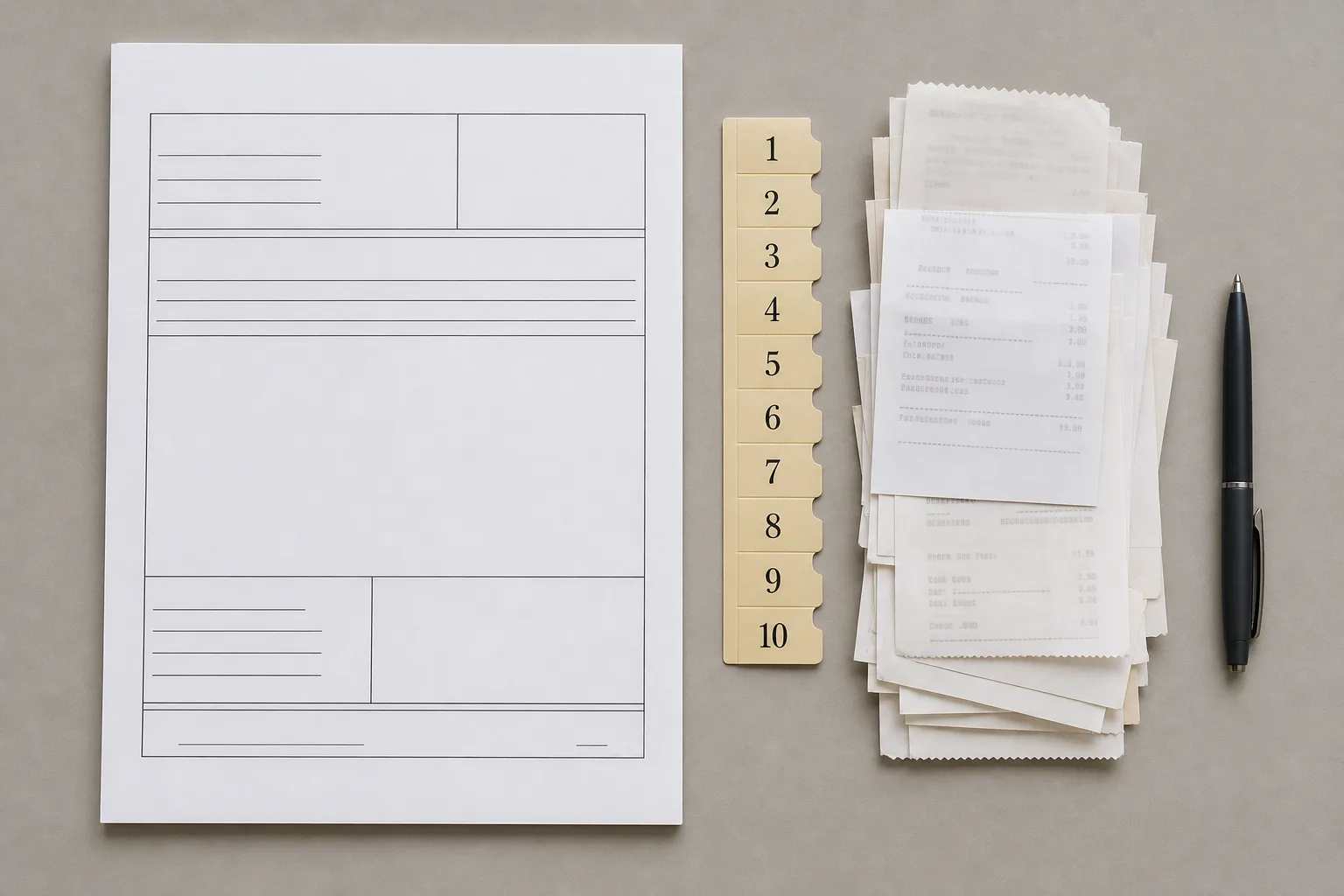
Every state sets a maximum amount that can be claimed in its small claims division, the figures differ substantially from one state to the next, and they are published by each state's own court system. Somebody preparing a claim usually finds that number first, treats it as a ceiling on what they might recover, and moves on to gathering receipts. The number is doing considerably more work than that. It is the reason the entire process looks the way it does, from the length of the hearing to the rules about what may be handed to the judge, and seeing the connection makes preparing a case a great deal simpler.
Why the Limit Produces the Procedure
A court handling modest claims cannot spend what a larger court spends on each one, and the economics force simplification at every step. Pleading is simplified to a form rather than a complaint drafted to formal standards, because requiring formal drafting would in practice require attorneys and attorneys cost more than the claims are worth. Evidence rules are relaxed, so documents needing formal authentication elsewhere are generally admitted, because the alternative is a hearing longer than the amount at stake justifies.
The pattern continues through the rest of it. Discovery, the pretrial exchange of documents and testimony that is the most expensive part of civil litigation, is largely absent. Hearings are short, frequently measured in minutes, with a judge or magistrate hearing both sides, looking at the documents and deciding. Representation is limited or excluded outright, since some states bar attorneys from small claims entirely while others permit them and the informality limits what representation adds either way. The practical consequence for anybody filing is that the case will be decided almost entirely on documents and on clarity, because there is no time available for anything else.
What the Limit Does to Your Own Claim
Three decisions follow directly from the number. Whether to waive the excess is the first, since most states allow a claimant whose loss exceeds the cap to claim up to the limit and permanently give up the remainder. The trade is speed, no attorney fees and a simple process against the amount surrendered, and for a claim only modestly over the cap it is frequently the right trade. Whether to split the claim is the second, and the answer is generally no, because dividing one transaction into two claims to fit the cap twice is barred in most jurisdictions and attempting it can cost both. What to leave out is the third, because interest, costs and sometimes fees may be recoverable on top of the cap or may count against it, and the rule varies enough that it is worth checking before deciding what to ask for.
Preparing for a Hearing That Is Short by Design
Assume a few minutes and assume the decision maker will rely on paper. Bring one page of facts in date order with each entry pointing at an exhibit number. Bring exhibits numbered and copied three times, one set for the court, one for the other side and one for yourself, because arriving with a single copy slows everything down and is noticed. Bring the contract or written agreement complete, or where the agreement was verbal, the messages and invoices showing what was actually agreed.
Two more items decide more cases than people expect. Proof of the amount, calculated rather than estimated, meaning a repair estimate, a replacement receipt or an invoice, since a number with no document behind it is the most common weakness in an otherwise sound claim. And proof that you asked first, meaning the demand letter and its delivery receipt, because courts respond well to a party who tried to resolve the matter before filing. Then practice saying the whole thing in two minutes: what happened, what was agreed, what it cost, what you want. Most people over-prepare the narrative and under-prepare the number.
Getting the Defendant's Name Exactly Right
This is the most common fatal error and it happens before anybody reaches a hearing. The claim has to name the correct legal entity at its correct address, and a business operating under a trade name may well be a corporation or an LLC registered under something entirely different, which means a judgment against a name that does not exist is worth nothing at all. State business registries are searchable online and will give the exact entity name along with the registered agent's address, so look it up before filing rather than discovering the problem afterward. The federal portal at USA.gov is a reasonable starting point for finding the right state agency where you are not sure which one holds the register.
The Step After Winning, Which Nobody Plans For
Winning produces a judgment, which is an official statement that the money is owed, and absolutely nobody hands over money at that point. The court will not go and collect it either. Collection is a separate process with its own procedures, covering garnishment of wages or accounts, liens, and in some states a debtor's examination requiring the losing party to disclose what they own, each with rules and some with fees attached. That is precisely why the defendant's ability to pay belongs in the decision about whether to file at all, since a judgment against a solvent local business is a practical asset while a judgment against a dissolved entity holding nothing is an expensive certificate. Cases prepared with that in mind tend to be short, and short is what the whole system was built for, which is how a limit that looks like a restriction turns out to be the thing keeping the process fast enough to be worth using.