Two Documents in Every Box: What the Warranty Covers and What the Support Policy Decides
The folded sheet in the box is a promise about the plastic and the circuit board. The web page nobody prints decides how many years the device stays worth owning.
- Written by
- Roy Castellano
- Published
- Filed under
- Tech
- Length
- 1,089 words, about 5 minutes
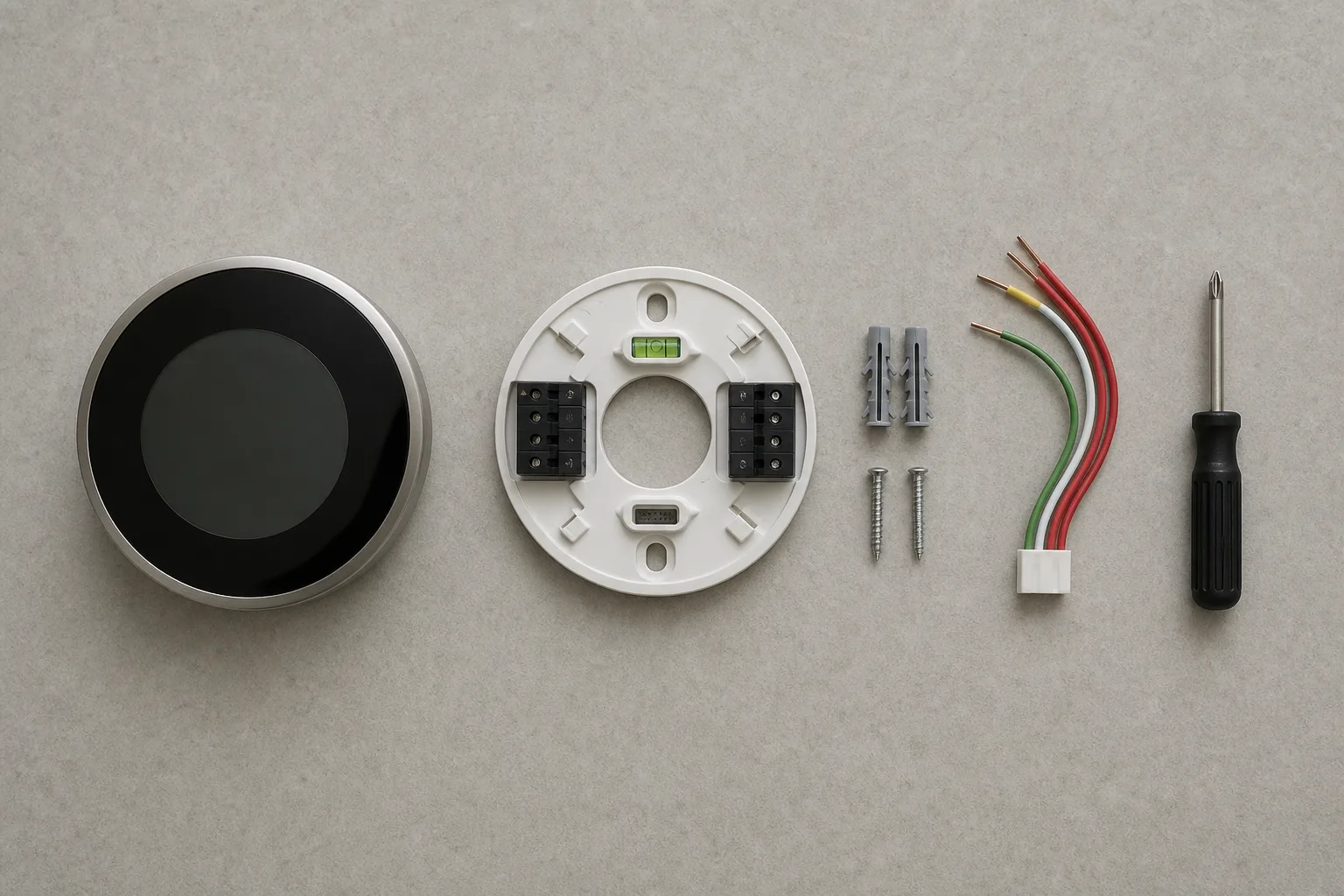
Almost everyone who buys a connected thermostat, a video doorbell or a garage controller treats the folded sheet in the box as the promise, and it is the only one of the two governing documents most buyers ever open. That sheet is the limited hardware warranty, a real commitment about a real object, and it is the smaller half of what is actually being purchased. The other document lives on a web page, is printed nowhere, references the warranty not at all, and quietly settles the question of how many years the thing screwed to the wall stays worth having there.
The Warranty Is a Promise About the Plastic and the Board
Standard language runs close to a single sentence: the manufacturer will repair or replace a product that fails from defects in materials or workmanship for one year from the date of original retail purchase. Every clause in that sentence is doing work. The choice between repair and replacement belongs to the manufacturer rather than to the owner, a replacement frequently arrives refurbished and inherits whatever remains of the original term rather than starting a new one, and defects in materials or workmanship covers neither ordinary wear nor a surge on the circuit nor a mistake made during installation. The term also runs from purchase and not from installation, so a device bought in March and mounted in September has already spent half its coverage sitting in a drawer. Most of these terms also run to the original purchaser and are not transferable, which becomes relevant the first time a house changes hands with the doorbell still attached to the frame.
The Software Side Is a Separate Promise, or No Promise at All
A connected device is two products sold as one. The hardware is the part the warranty describes, while the firmware, the security patches and the servers the phone app talks to are governed by something else entirely, and frequently by nothing anybody could point at. A hardware warranty in perfect standing places no obligation on anyone to keep a data center running, which is why owners are periodically surprised to find a unit that has never once failed mechanically going dark on an ordinary Tuesday because a service was retired. The warranty is about failure, the support policy is about abandonment, and abandonment is the far more common ending.
Three Ways the Support Question Gets Worded
The strongest version is a dated commitment tied to a specific model, with security updates named to a month and a year and published somewhere a buyer can find them before paying. That version is rare, it is specific, and it is the only one anybody can genuinely plan around. The second is a rolling commitment measured from the day the model stops being sold, which sounds weaker and often is not, since the clock starts when the model leaves the catalog rather than when your particular unit left the shelf. Buying on those terms means knowing roughly how old the model already is, and independent review sites answer that question much faster than the manufacturer will.
The third version covers most of the market. For as long as commercially reasonable, at our sole discretion, or simply silence on the subject. None of those phrasings is a scandal and none of them is a promise either, so the honest way to read a device sold on those terms is as a rental with an unknown remaining term, priced against a competitor that was willing to write a number down.
What the Last Day of Support Looks Like in a Real House
Three endings are possible, and the product's engineering rather than its legal paperwork decides which one arrives. A device with a local control path keeps doing its main job, so a thermostat with a dial and an onboard schedule loses the app and keeps the heat running, and a lock with a keypad and a brass key loses the app and still opens the door. A device without that path loses whatever needed a server first, meaning remote access, push notifications, voice assistant integration and stored video, and then, if nothing sat underneath those features, it stops being a device at all and becomes a housing fastened to a wall.
Repairability, and the Arithmetic That Arrives Years Later
The third document worth finding before paying is the parts list. A doorbell assembled with screws, sold alongside a spare mounting plate and a battery the owner can change, has a repair path that costs a fraction of replacement. A unit glued shut around a battery soldered to the board has exactly one failure mode and exactly one price, and that price is the price of a new one. Owners who never think about this still pay for it, because the difference shows up not on the receipt but in cost per year of service, where two similarly priced devices can diverge by a factor of two or three across a decade. It is also where warranty law and ordinary maintenance meet, since a manufacturer cannot simply declare coverage void because someone opened a housing or fitted a third-party battery, a limit written into the federal warranty statute the Federal Trade Commission enforces.
Reading Both Documents Before the Card Comes Out
Three checks take about five minutes standing in the aisle. Search the model number together with the phrase end of support, and treat silence on the manufacturer's own site as an answer rather than an absence of one. Confirm the device has a manual control path, a dial, a keypad, a key or a physical button, because that feature outlives every policy ever written about it. Confirm that it still works on the local network with the internet unplugged, which a few manufacturers state outright and owners describe at length for the rest. Then keep the receipt with the purchase date on it, since every claim gets measured from that date rather than from the day the device went up.
The pattern that holds up over a decade is unglamorous and has almost nothing to do with features. Buy the device that still does its main job on the morning the company that made it stops caring, treat everything the app adds as a bonus with an expiry date attached, and the folded sheet in the box goes back to being what it always was: a useful promise about the plastic, good for a year, and entirely silent on the question that decides how long you keep the thing.