Your Glazier Closed and the Seals Failed. Which Half of the Warranty Still Pays
A commercial storefront fogged five years after install, and the company that installed it no longer existed. The product warranty survived; the labor warranty did not.
- Written by
- Ellen Marsh
- Published
- Filed under
- Property
- Length
- 1,200 words, about 5 minutes
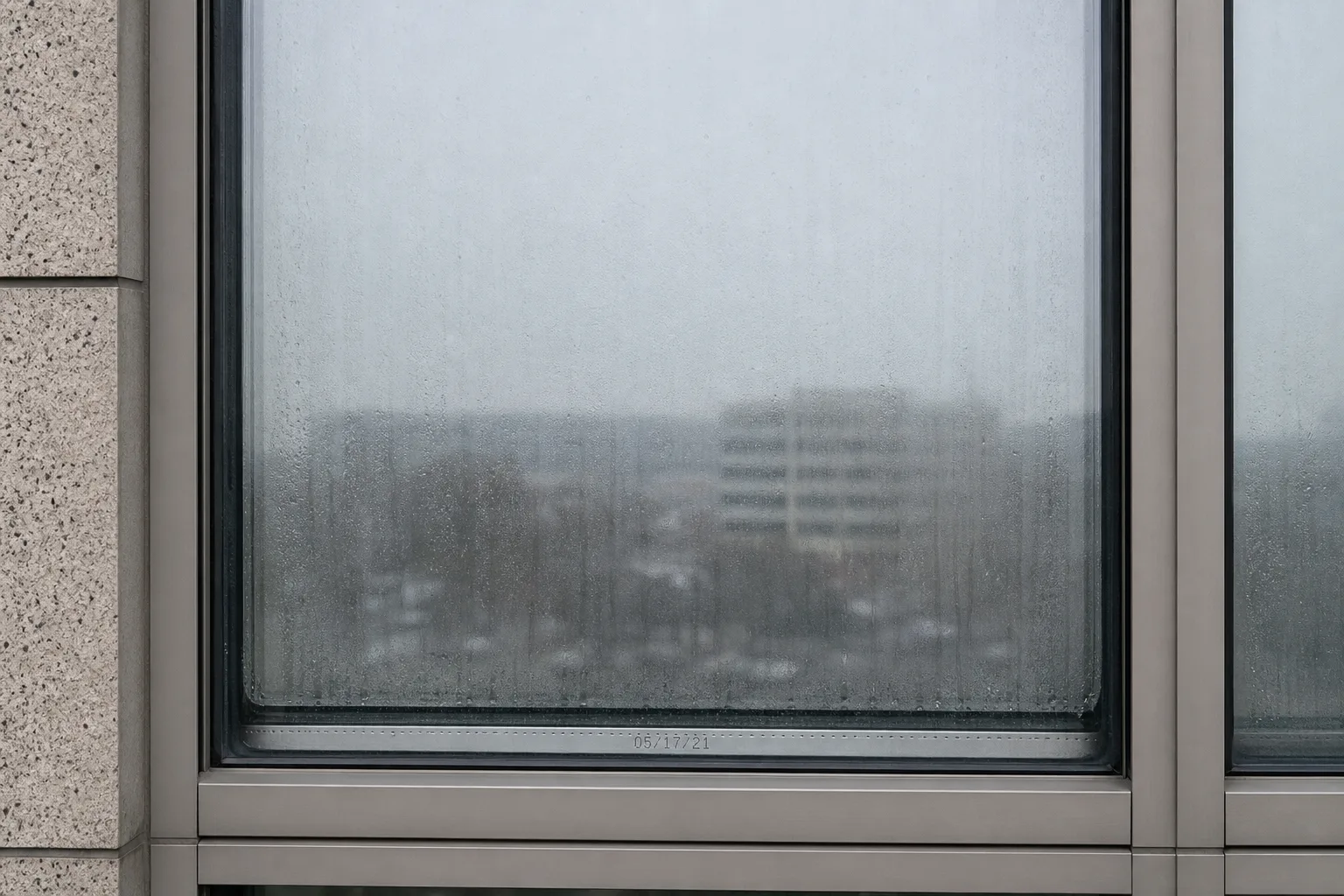
The sales sheet said twenty years. The building got five before the north elevation started to fog, and by then the company whose logo sat at the top of that sheet had been dissolved, renamed, and reconstituted as a different LLC with two of the same principals. The warranty did not vanish. But only part of it had ever been the installer's to give, and that was the part that still worked.
What follows is one commercial file, the kind a property manager inherits mid-stream. The specifics are ordinary. That is the point.
The assumption, stated plainly
Most buyers read a glazing warranty as a single promise with a single duration. Twenty years on the windows. Ten years on the storefront. One number, one obligor, one phone call if something goes wrong.
In commercial glazing there are almost always three promises stapled together, and they have different lifespans and different owners:
- The sealed unit warranty. Issued by the insulating glass fabricator, covering seal failure, visible obstruction between the panes, and sometimes coating defects. Typically materials only. Often pro-rated after a set number of years.
- The component warranties. Framing finish, hardware, operators, gaskets, sometimes structural silicone. Issued by the manufacturers of those parts, each with its own term.
- The workmanship warranty. The installer's own promise, on the installer's own letterhead, covering labor, water intrusion from bad perimeter sealing, misinstalled units, and the cost of taking glass out and putting it back in.
The first two are backed by companies that make glass and extrusions and rarely disappear. The third is backed by whoever was holding the hoist. When that entity goes, the labor obligation goes with it. The glass warranty does not.
What the file actually contained
The building was an eight-story office property, storefront at grade and a punched-window curtain wall above. Installed by a local firm in the mid-2010s. Five years later, three units on the exposed elevation showed the classic signature of seal failure: haze that came and went with the sun, then settled into permanent clouding with a faint line of residue at the bottom of the airspace.
The manager's first call went to the number on the warranty certificate. Disconnected. The second went to the principal's cell, which worked, and produced the information that the original company had sold its assets and the new entity had not assumed prior warranty obligations. That is a sentence a lot of people hear and treat as the end of the matter.
It was not. The file held three usable things:
- A glass schedule from the submittal package, naming the fabricator and the unit makeup.
- The fabricator's warranty certificate, separate from the installer's, with a ten-year term on seal failure.
- Invoices identifying the job by name, which is how a fabricator ties a claim to a production run.
And the units themselves carried a spacer stamp, legible from inside once someone got close with a flashlight. That stamp is the fabricator's date code. It is the single most useful thing on a failed insulating glass unit, and it survives the bankruptcy of every company in the chain.
Where the larger organization changed the outcome
A fabricator will not generally hand replacement units to a building owner. Claims come through a party with an account, because the fabricator needs a glazier to measure, confirm makeup, take delivery, and accept responsibility for the install. No account, no claim.
That is the practical reason this building ended up calling a firm several times the size of the one that did the original work. The larger outfits running storefront and curtain wall service in metro markets hold standing accounts with the major fabricators, which is what lets them file a warranty claim on glass someone else installed. When a property manager starts calling commercial glass contractors after an installer has folded, the question that actually sorts the list is whether the firm has those accounts and a service department that runs separately from new-construction sales.
Scale bought four specific things on this job:
- Standing to file. The claim went in under the contractor's fabricator account, referencing the spacer code and the original glass schedule. The fabricator supplied replacement units at no material cost.
- Records that outlived the original job. The service estimator reconstructed the unit makeup from the submittal, which mattered because matching a low-E coating by eye is guesswork and a mismatched replacement reads as a visibly different pane from the sidewalk.
- A crew with the right equipment on a schedule. Fourth-floor punched openings meant a lift and a street permit. A two-truck shop can do that work. It cannot usually do it the week you ask.
- A warranty on the new labor that will plausibly still exist. A workmanship promise is only worth the survival odds of the entity making it.
The owner paid labor, the lift, and the permit. The glass itself came free, five years after the company that sold it stopped existing. That is a better result than most people expect when they discover their installer is gone.
The questions that settle this before you sign
The Federal Trade Commission is the agency responsible for how consumer warranties are written and disclosed, and the discipline it pushes toward (one document, terms stated, obligor named) is worth importing into commercial work where nobody is required to do it for you. Ask for the pieces separately.
Ask who owes what
- Which of these promises is on your letterhead, and which is a manufacturer's certificate? Hand me both documents, not a summary.
- On a warranted seal failure in year seven, who pays for labor, lift, and disposal? Get the answer in writing, because "materials only" is the default and it is where the real cost sits.
- Is the sealed unit warranty pro-rated? From what year?
Ask about survival and transfer
- Does the workmanship warranty transfer if the building sells, and does it require notice to you within a set window?
- If your company is acquired or restructured, does the service obligation follow the entity?
- Does another contractor touching the glass void anything? On curtain wall with structural silicone, sometimes yes.
Ask what the service side looks like
- Is there a service department with its own dispatch, or does a warranty call land in the same queue as new bids?
- What is realistic lead time on a custom replacement unit for this makeup? Coated, laminated, or oversize units are not stock items.
- What do you retain, and for how long: shop drawings, glass schedule, fabricator certificates, spacer codes?
What to keep, and where
The file that saved this building was thin. It needs to be: submittal package with the glass schedule, every manufacturer certificate as its own document, the installer's workmanship warranty, the final invoice naming the job, and a photograph of a spacer stamp on each elevation. Store it with the building records, not with the contractor, and hand it to the next manager.
Do that and the question stops being whether anyone still stands behind the glass. Somebody does. The question becomes which somebody, and whether you can prove the date, and both of those are answerable from a folder you can assemble on the day the work is signed off.