Can You Write the Demand Letter Yourself Before Paying Anyone Else to Write It?
A clear, dated, factual letter settles a surprising share of ordinary disputes for the price of certified postage, and it costs almost nothing when it fails.
- Written by
- Roy Castellano
- Published
- Filed under
- Legal
- Length
- 1,122 words, about 5 minutes
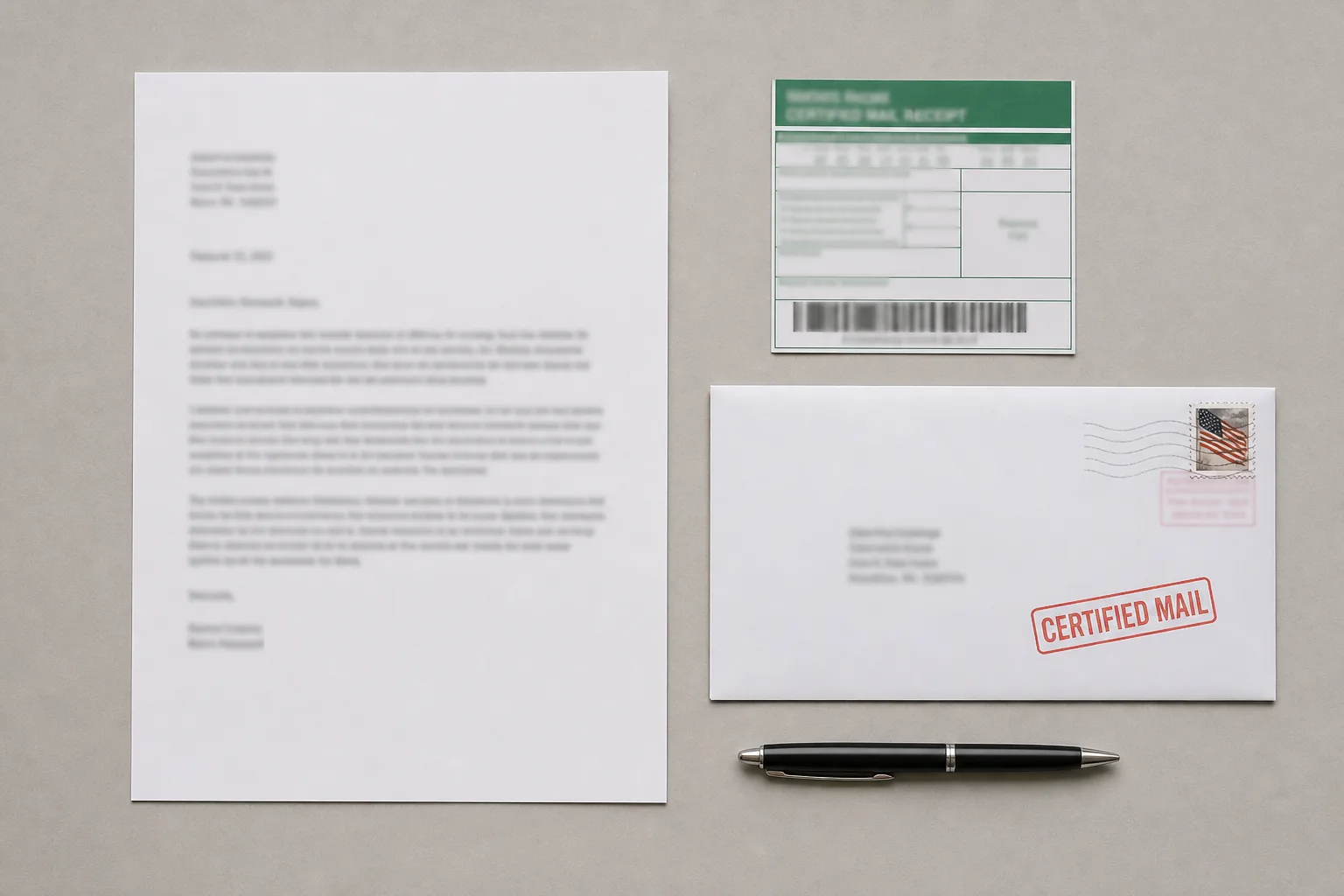
The common assumption about a demand letter is that its power comes from the letterhead, which is why most people who need one start by looking for somebody to write it. A substantial share of ordinary disputes settle at exactly this step regardless of who signed the page, and the version written by the person who actually lived through the events is frequently better than anything assembled from a template, because it contains the dates, the documents and the specific sequence that a template can only leave blank. What matters is the structure, the tone and knowing the handful of situations where sending it yourself is genuinely the wrong move.
What a Demand Letter Is Actually Doing
It does three jobs simultaneously and the third is the one people undermine. It states a claim clearly enough that the recipient can evaluate it, which is most of the work. It creates a dated record that the claim was made, which matters for deadlines and for anything that follows afterward. And it hands the other side a cheap way to end the matter, which is very often what they want. A letter written to express how the sender feels defeats that third job entirely, because it invites a defensive response rather than a calculation, and a calculation is the only thing that produces a check.
The Six Parts, in That Order
One page, or two if the facts genuinely require it. Open with identification: your name and address, the recipient's name and correct legal entity, the date, and a reference such as an invoice or a contract number. Then the facts in date order, in short sentences carrying no adjectives, covering what was agreed, what was paid, what happened, and what you asked for and when. Then the basis, meaning one or two sentences explaining why they owe you something, quoting the contract clause where one exists. You do not need to cite statutes and should not attempt to.
Then the amount, given as a specific number with a short breakdown showing how it was reached, since vagueness here is by a distance the most common weakness in letters written without help. Then the demand and the deadline, naming what you want and a reasonable date, where two to three weeks is normal and anything shorter reads as theater. Finally one sentence stating what you will do if the deadline passes, included only if you actually intend to do it.
What to Leave Out, and Why Each One Costs You
Anger comes out first, because the letter may eventually be read by a judge, an insurer or the recipient's counsel, and every intemperate sentence in it is a liability while none of them advance the claim. Threats you will not carry out come out next, since a stated intention to file suit that never materializes weakens every letter you send afterward to anybody. Anything touching criminal consequences comes out absolutely, because threatening to report somebody in order to obtain a payment is a serious problem for the sender and can be unlawful in itself.
Two subtler omissions matter as much. Everything you know does not belong in the letter, which is a demand rather than a brief, and facts held back now remain available later while facts disclosed early can be prepared against. And settlement talk does not belong mixed into the demand, because a clean ask followed by a separate negotiation is stronger than a letter that has already started conceding before anybody responded to it.
How to Send It So the Sending Can Be Proved
Certified mail with return receipt, addressed to the correct legal entity at its registered address, which for a company is usually discoverable through the state's business filings in a few minutes. Send a copy by email as well so that it arrives quickly, and keep both proofs together with a copy of the letter exactly as sent. Attach the supporting documents you referenced, marked as enclosures and numbered so the text can point at them, and keep every original in your own hands rather than in the envelope.
The Three Responses, All of Them Useful
They pay, or offer part of it, which is the good outcome and the one to evaluate carefully against the cost of pursuing the difference, getting any settlement in writing before accepting funds. They respond with their side of it, which is genuinely valuable information arriving at the cheapest moment it will ever be available, and which sometimes reveals a document nobody knew existed. Or there is silence, which is also information, since it usually means the matter will require the next step and you now hold a dated record showing that a reasonable attempt was made first.
None of those three is a failure, which is the reassuring part of writing the letter yourself. The worst realistic outcome is the price of certified postage and an evening, and the best is a resolved dispute at a stage where nobody has spent anything meaningful. That asymmetry is the whole argument for doing it in this order rather than starting with a consultation.
When It Should Not Come From You
Six situations change the answer. A close deadline is the first, because where a limitation period or a contractual notice period is near, the priority is preserving the claim and the applicable period is a question for somebody who knows it. The other side already having counsel is the second, since correspondence between a lay claimant and an attorney is a different exercise with different risks. Personal injury is the third, where valuation is specialized and early statements are expensive. A contract with a mandatory process is the fourth, since many require notice in a particular form or mediation before anything else, and skipping the required step can forfeit rights outright. Employment matters are the fifth, with their own agencies, procedures and deadlines in a sequence that matters. And the sixth is simply size, because above the amount at which you could not accept a bad outcome, the fee is small against the exposure.
Where your own letter produces nothing, the same letter on a firm's letterhead sometimes does, and a good many attorneys will write one for a flat fee. What makes that version work is not the wording, which may be nearly identical to yours. It is that it signals a willingness to spend money, which changes the arithmetic on the other end of the correspondence. Having written your own first makes that step considerably cheaper, since the facts, the dates and the documents are already assembled, and that assembly is the part that would otherwise be billed by the hour and the part that only you could ever have done.