Wind Lifted Twenty Shingles on One Slope. The Paperwork That Gets It Paid
A single storm-damaged roof slope on a coastal house, and the documents, photos and measurements that decide whether the insurer pays for a repair, a slope or a roof.
- Written by
- Ellen Marsh
- Published
- Filed under
- Property
- Length
- 940 words, about 4 minutes
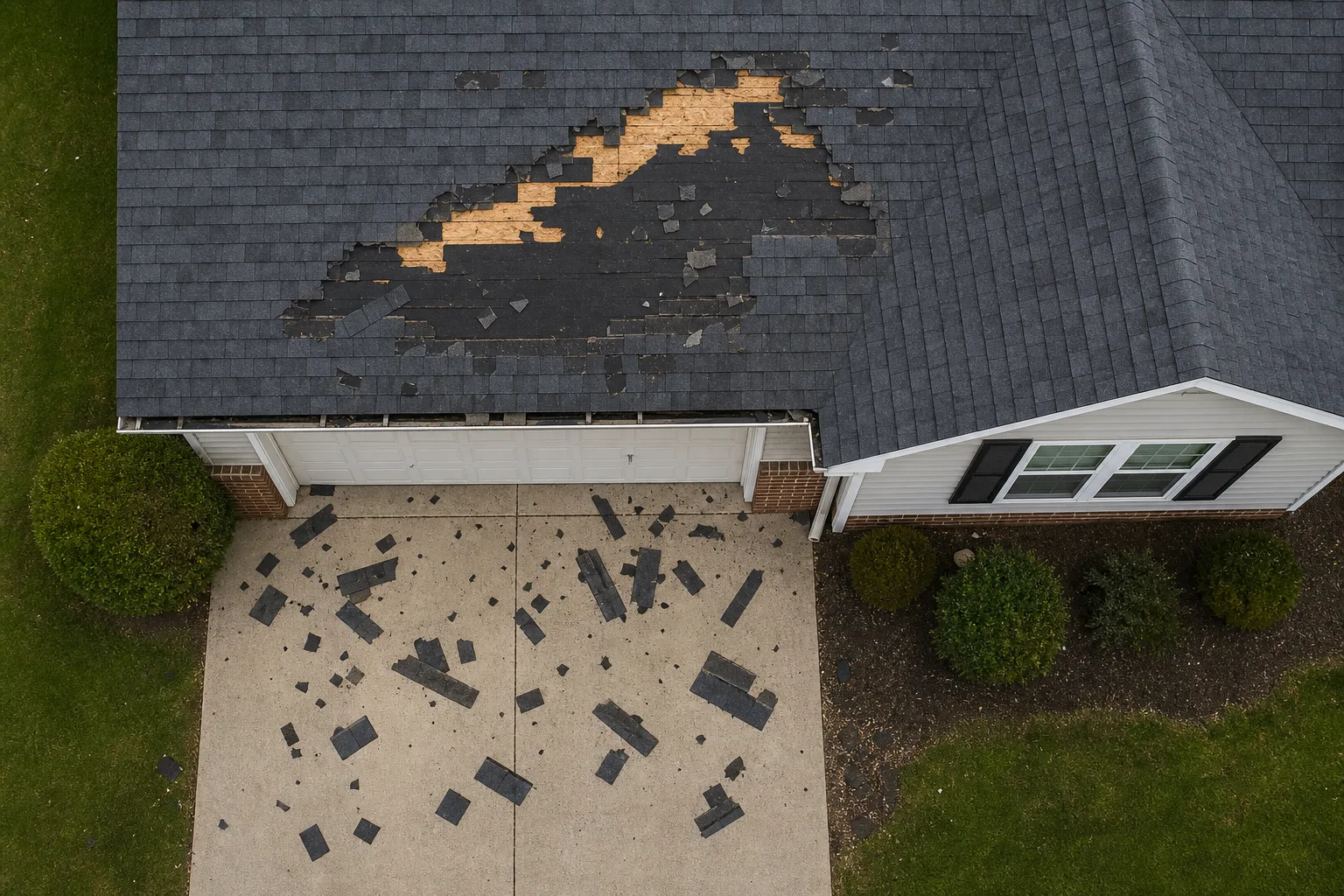
Take one house. Single story, hip roof, architectural composition shingles installed about fourteen years ago, three blocks from the water. A winter storm comes through with sustained onshore wind and a few hard gusts. The next morning there are shingle tabs in the side yard, a bare patch on the southwest slope roughly the size of a car hood, and no water inside yet. That is the whole event. What happens next is almost entirely a paperwork exercise, and the homeowners who do well at it are the ones who started collecting before the storm.
What the policy is actually deciding
The adjuster is not asking whether your roof is old. The adjuster is asking one question: did a covered peril cause this specific damage, or did it just reveal a condition that was already there?
Wind is a named peril on nearly every standard homeowners form. Wear, deterioration, and failure of adhesive strips over time are excluded. Those two facts sit next to each other on the same slope. Twenty missing tabs in a contiguous patch, with clean tear lines and granule scour on the courses above, reads as wind. Twenty missing tabs scattered across four slopes, with curling and exposed nail heads everywhere, reads as a roof at the end of its life.
Two other clauses decide the size of the check. First, whether your coverage is replacement cost or actual cash value on the roof specifically. Many carriers have moved roofs to a separate schedule that depreciates by age even when the rest of the dwelling is replacement cost. Second, your wind or named-storm deductible, which may be a percentage of the dwelling limit rather than the flat dollar figure you remember. On a coastal property, check both before you file anything.
Flood is not in this conversation at all. Rising water and storm surge are separate coverage, written through the National Flood Insurance Program, which FEMA administers. A wind claim on a roof and a flood claim on a first floor are two different files with two different rules.
The folder you should already have
The single most useful document in a storm claim is the one that proves what the roof looked like the week before. Almost nobody has it. Build it now, in twenty minutes:
- Dated photos of every slope, taken from the ground with a zoom, plus the ridge and the valleys. Four corners of the house, then close-ups of anything already imperfect.
- The original installation invoice, or whatever you have from the prior owner. It establishes age, product line, and who did the work.
- The manufacturer's product name and wind rating, usually printed on a leftover bundle wrapper in the garage or listed on the invoice.
- Any permit record for the reroof. Municipal permit portals are searchable by address and the record outlasts your files.
- Your declarations page, current version, with the wind deductible and roof settlement basis highlighted.
- Maintenance receipts. Gutter cleanings, a vent boot replacement, a tune-up after the last big blow. These defeat a neglect argument faster than any argument you can make yourself.
Store it somewhere that is not the house.
The forty-eight hours after
Photograph before you touch anything, including the debris in the yard. A shingle tab lying on the driveway with a clean adhesive line is evidence; the same tab in a trash bag is nothing. Note the date and the storm. National Weather Service reports for your zip code are public and free, and a printed wind observation for the right date and location does more work than a paragraph of description.
Then stop the loss. Tarp or dry-in the exposed deck and keep the receipt. Emergency mitigation is covered under nearly every policy and it is also the thing carriers cite when they deny consequential interior damage later.
Get one written estimate from a licensed contractor before the adjuster visits, not after. On the coast you want someone who works the local stock daily and knows how salt air and onshore wind behave on a fourteen-year-old composition roof, which is why homeowners in this exact situation start with a company that specializes in roofing in long beach rather than whoever knocked first. Verify the license number with the state board yourself. Post-storm door knockers are a known pattern and the Federal Trade Commission oversees deceptive practices in exactly that kind of solicitation.
Where the numbers get argued
The adjuster writes a scope. Your contractor writes an estimate. The gap between them is the claim.
On our one slope, the fights are predictable:
- Repair versus slope replacement. A fourteen-year-old discontinued shingle usually cannot be matched. Ask the supplier for a written statement of unavailability and put it in the file.
- Slope versus full roof. Some states and some policies require matching across a continuous surface. Read the language rather than assuming.
- Code upgrades. Current requirements for underlayment, drip edge, or ventilation may exceed what is up there now. Ordinance and law coverage pays for that, if you carry it and if you ask.
- Depreciation withheld. On replacement cost, the holdback is recoverable once the work is done and invoiced. Send the final invoice. That step is skipped constantly.
If the two documents stay far apart, most policies include an appraisal clause. It is cheaper than litigation and it exists for exactly this disagreement.
One slope, one storm, one file. The homeowners who get a full and quick settlement are rarely the ones who argued hardest. They are the ones who could produce a dated photo, an invoice, a weather report and a license number without leaving the kitchen table.